




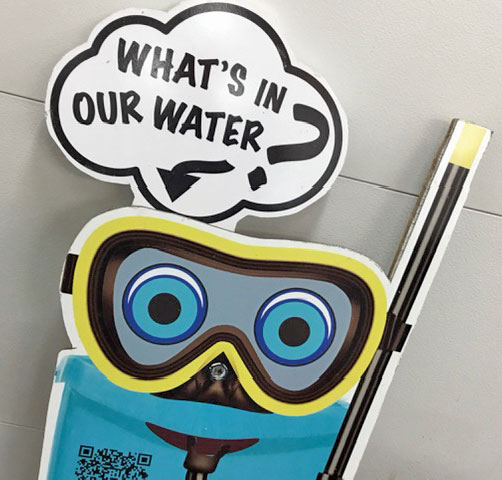
Submitted by “Inspector Seabin”
That is the question that I and my 2 other Seabin cohorts and our 14 citizen science volunteers have studied to answer over the last two summers. We have been capturing floating debris in three local Seabins, two in Little Tub Harbour and one in Lion’s Head Marina.
For those unfamiliar with these devices, they are essentially in-water trashcans that collect localized floating natural and man made material by pumping harbor water through a filter capture bag.

Every day for the last two summers (May 15 to September 15) members of the volunteer team monitored each Seabin for the amount of captured debris, and if significant, emptied the captured bag into the garbage/recycling. Before emptying the bag the contents were weighed, described and current weather conditions noted. This information was then submitted through a smart phone APP to the University of Toronto Rochman Lab.
Data from our Seabins, and 95 similar trash trap devices spread throughout the Great lakes and some northern American cities, forms the base for a system-wide study of anthropogenic waste in our water.
Also, about 5 times a season, team members performed “Deep Dives” on the daily captured debris. This involved putting the debris through separating sieves, sorting with gloves and tweezers natural from man made items, counting and characterizing each debris piece and again submitting the data to the lab.
The lab analyzed our data and has just submitted our 2023 results. And what did we find in our water?
Single Use Plastics.
A big proportion of our find was cigarette butts. This form of plastic pollution is of particular concern. The thousands of cellulose acetate micro fibers found in each filter are easily ingested by aquatic life and water systems. And the more than 4,000 toxic chemicals captured by filters are backwashed into our water through wave action.
The majority of the rest of the debris was single use plastics: pieces of food and beverage wrappers and containers.
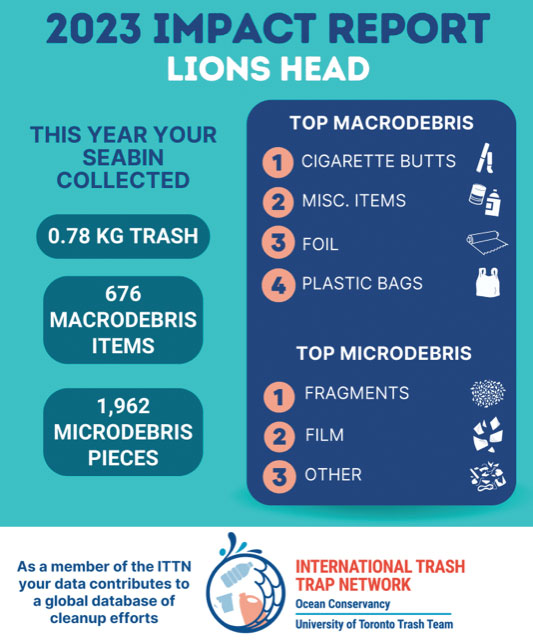
The system-wide findings were similar to ours. Metropolitan areas had greater debris concentration, but similar items. Recent estimates suggest that more than 10,000 metric tons of plastic enters the Great Lakes each year, and continues to increase.
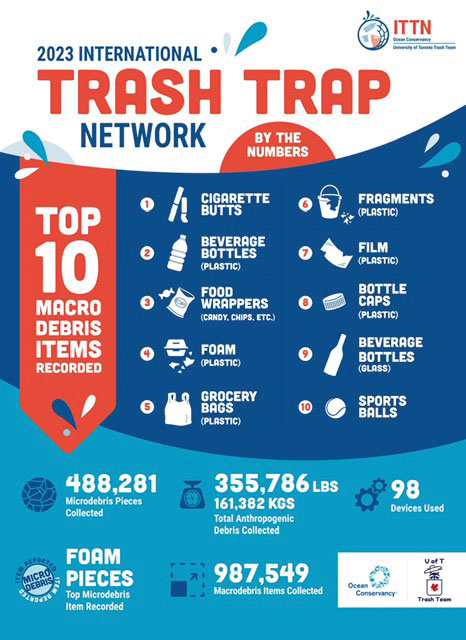
Though I and the Seabin team are sometimes discouraged by our study results we know that appropriate change requires good information. We are also buoyed by the fact that this is a problem that each of us can impact. We can selectively replace single use items with reusable and push for “Bring Your Own” accommodation over prepackaged purchases.
The Seabins will again be deployed this summer. Please stop by and say Hi to the Inspector and if on site, talk to our citizen science volunteers.
For more information on the project see the “Sources of Knowledge-Tobermory-Seabin”website sourcesofknowledge.ca/seabins/