
Submitted by Joanne Rodgers,
Bruce Peninsula Environment Group
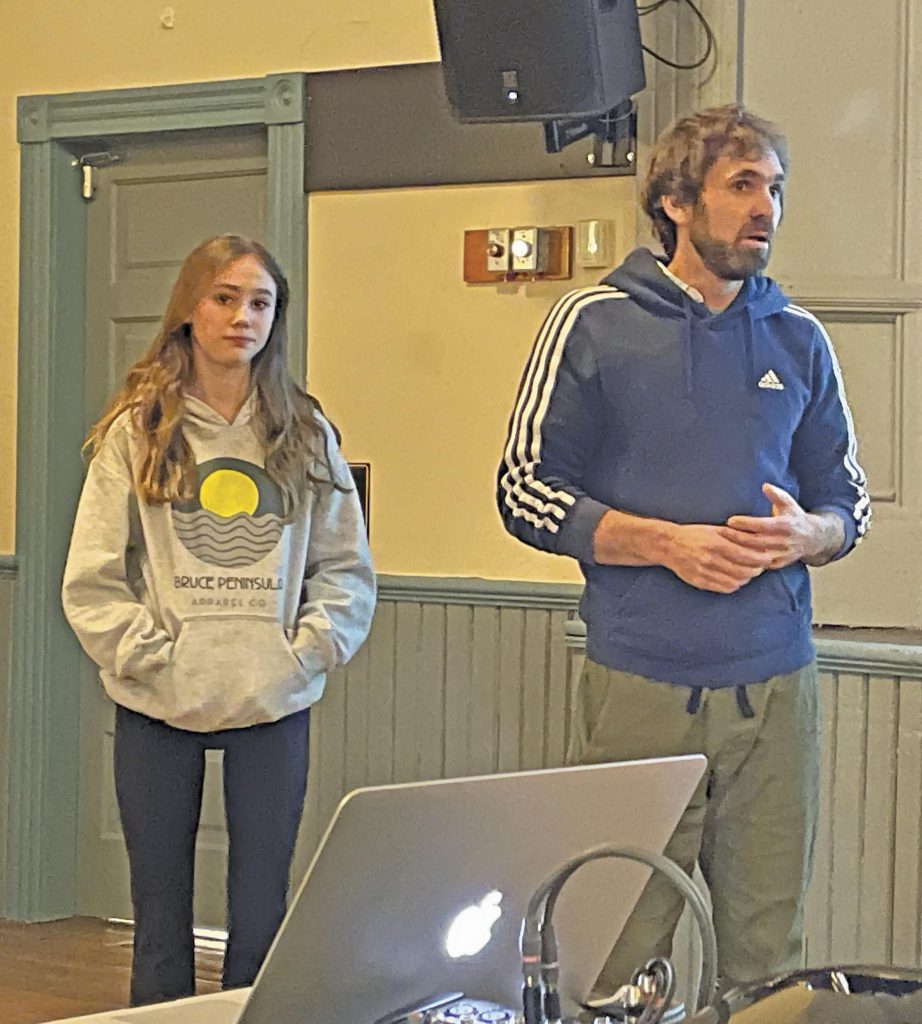
Three years later than scheduled, derailed by COVID-19, BPEG members were finally able to hear a first hand account of Scott and Acadia Parent’s paddleboard adventure across Lake Huron.

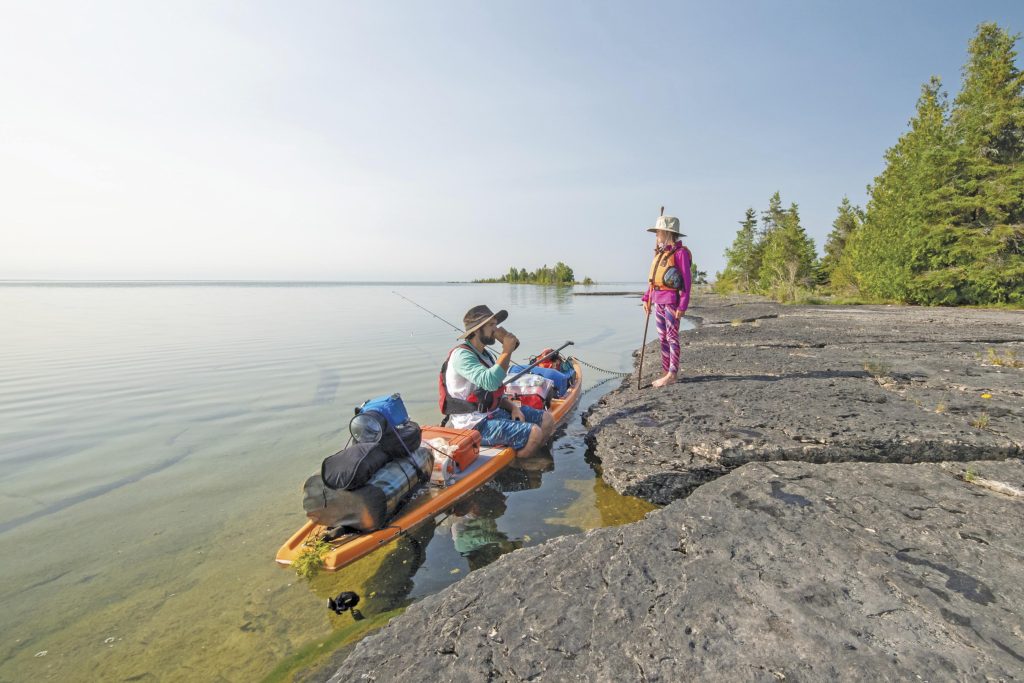
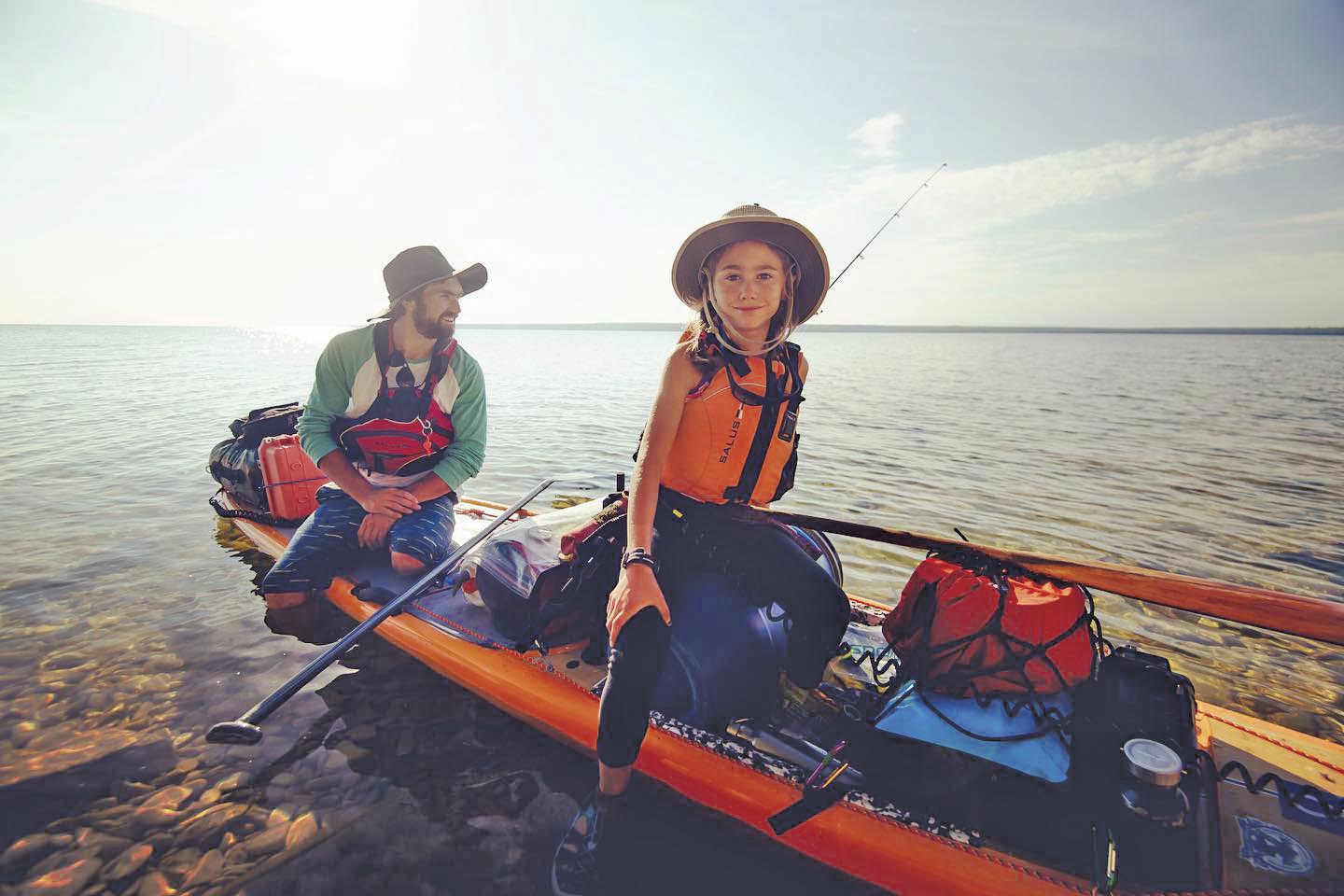
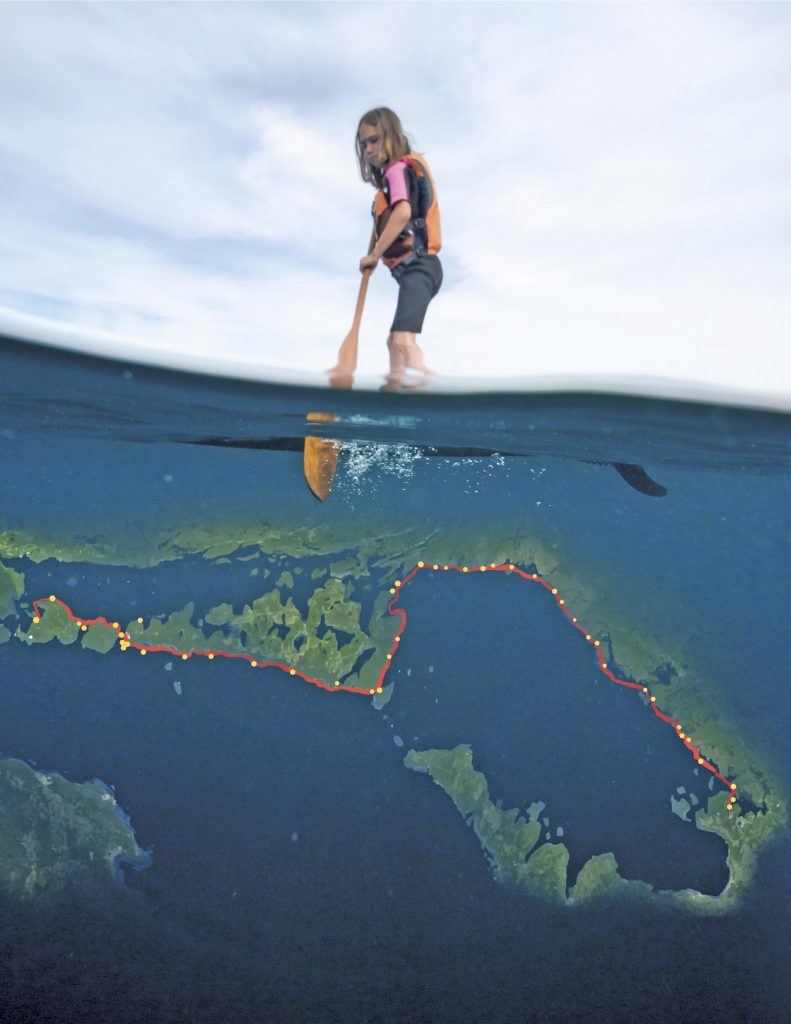
On February 1, 2023, community members filled the Rotary Hall to hear about Scott and his daughter Acadia’s standup paddleboard journey in 2019 of nearly 500 km from Drummond Island, Michigan,USA to Penetanguishene, Ontario, Canada.
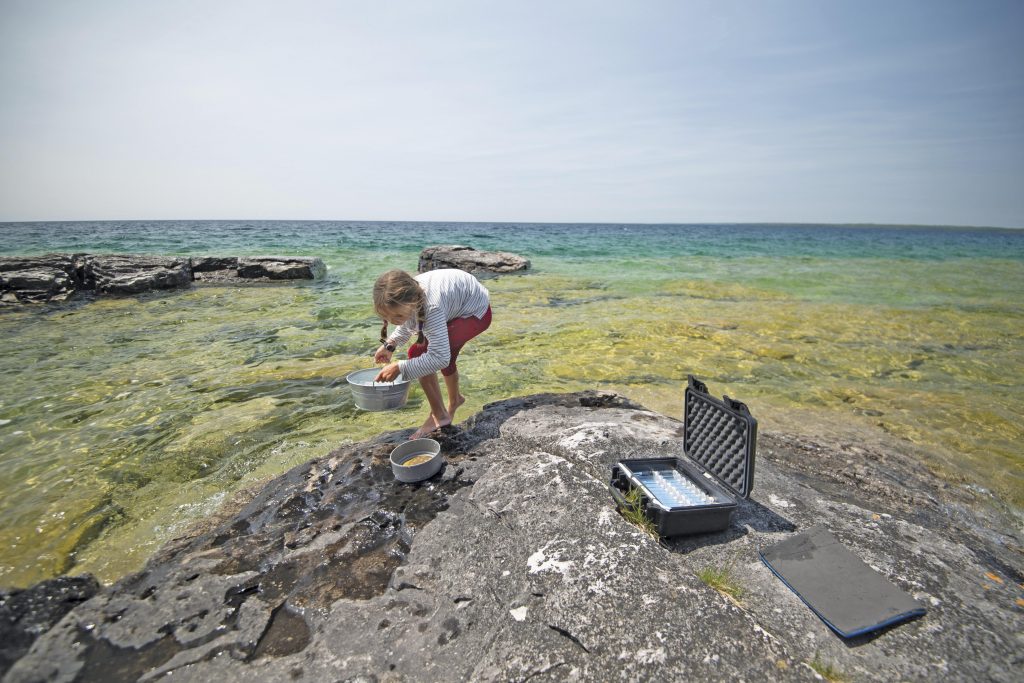
Sharing 20 minutes of their film, (the full film is one hour ten minutes long), which is narrated by Scott and Acadia, it showed them using a Blu Wave Catalina 14’ Expedition touring SUP carrying all their gear including a deep water sampler they borrowed from BPDS, as they paddled across all three bodies of Huron: the North Channel, Lake Huron proper and Georgian Bay. The journey took them one moon cycle (one month) to complete.
Scott set the stage for the film, explaining that he and then nine year old Acadia were retracing the ancestral route of their Métis ancestors, combining it with Acadia’s desire to investigate the water to assess the degree of microplastics contamination.
Scott explained “What you’ll see in the film is a father and daughter’s adventure, but the story is much more than that. Our shore support is everything. It is the story of a mother on shore supporting her daughter’s epic trip along the way, a story of a grandmother who had the chance to explore the ancestral island of her Métis heritage for the first time with her son’s family, seeing them off at departure at Drummond Island. We could not have succeeded without the support of our family on shore.”
One of Acadia’s best memories of the trip would be when an eagle appeared and seemingly guided them during a portion of their journey. Acadia said the encounter with the eagle gave her the “confidence to see what she could really do.”
Acadia said she relied on her dad’s expertise and skill to get them through some more dangerous aspects of the journey, such as high waves that almost flipped the paddleboard.
Along the way, the father-daughter team tried whenever possible to clean-up the areas of garbage and take it along with them for safe disposal. They found garbage, styrofoam or plastic at every single stop on their journey.
They took 44 water samples, 39 surface samples and five deep water samples. 42 samples contained plastics, mostly fibres and marine foam, and even found at the depth of 50 feet and in very remote places. This was some of the first evidence of microplastic at depth for Lake Huron.
They plan to collate their findings and produce a report to be used to raise awareness and for educational purposes. They hope their film will inspire people to rethink their relationship with the environment. Scott says there’s a place for the use of plastics. His journey with Acadia would not have been possible without plastic, from the paddleboard, to containers for their gear to the clothes they wore. However he says “do you really need a single use plastic wrapper for the cucumber you purchase?”
Scott and Acadia have focused their energies on doing beach cleanups over the last three years. Scott says the garbage on our shores is carried by the waters of the Lakes to the remote islands of the Bay.
Scott and Acadia hope to screen their film as a fundraiser for BPDS Outers and Senior Science Program sometime this year.
To learn more about the film and future screenings, follow @threewaters.film. on instagram.