


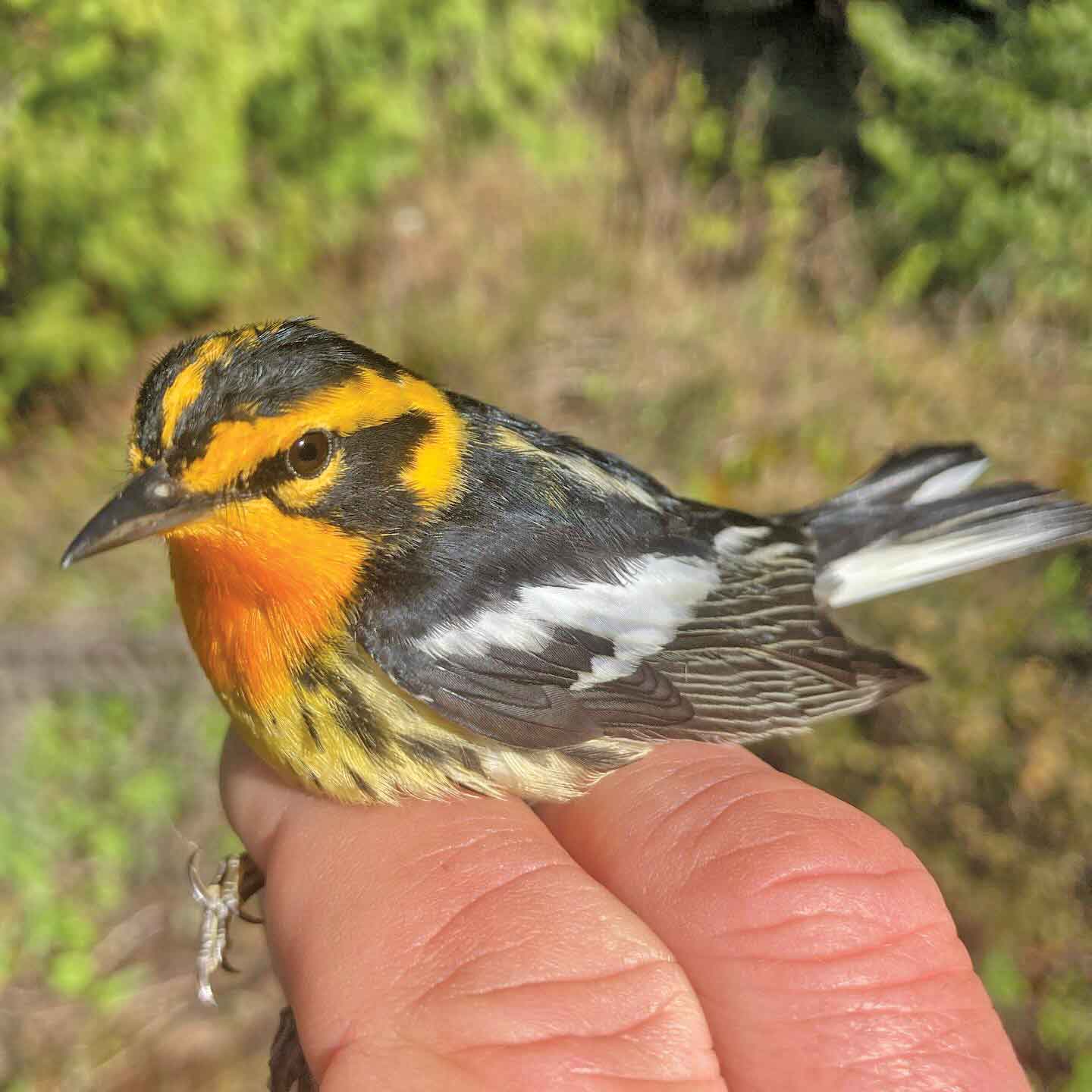
Submitted by Bruce Peninsula Bird Observatory (BPBO)
Cabot Head Road provides important access to the nationally recognized Bird Observatory Research Station, and the historic Cabot Head Lighthouse.
One of the most scenic shoreline routes in the area, it is a natural tourism asset and an essential component of the cycling-based Gravel Gran Fondo, the Biosphere Association’s major fundraiser and a fall tourism event.

The Bird Observatory (BPBO) and Biosphere Association (BPBA) have strongly supported the Municipal proposal to convert Cabot Head Road to a multi-use trail for cyclists, hikers and authorized users (emergency vehicles, BPBO and Lighthouse volunteers and staff). The BPBO Board wishes to clarify misconceptions raised in the June 8th Council meeting that discussed converting the road to a trail.
Road Has Been Thoroughly Studied
The Bird Observatory thanks Councillor Golden for keeping the future of Cabot Head Road on Council’s agenda.
Six years ago, Councillor Golden and Mayor McIver were involved in Council discussions with the BPBO, BPBA and Friends of Cabot Head Lighthouse. After 60 meetings conducted by the three charities with three levels of government, SON, Dyers Bay Association, Bruce Trail and the American landowner, the charities drafted a 30-page proposal examining how to convert the road to a trail. Funding was secured and stamped engineering drawings developed.
Council began the current deliberations on the future of Cabot Head Road in 2025 and initiated a community consultation.
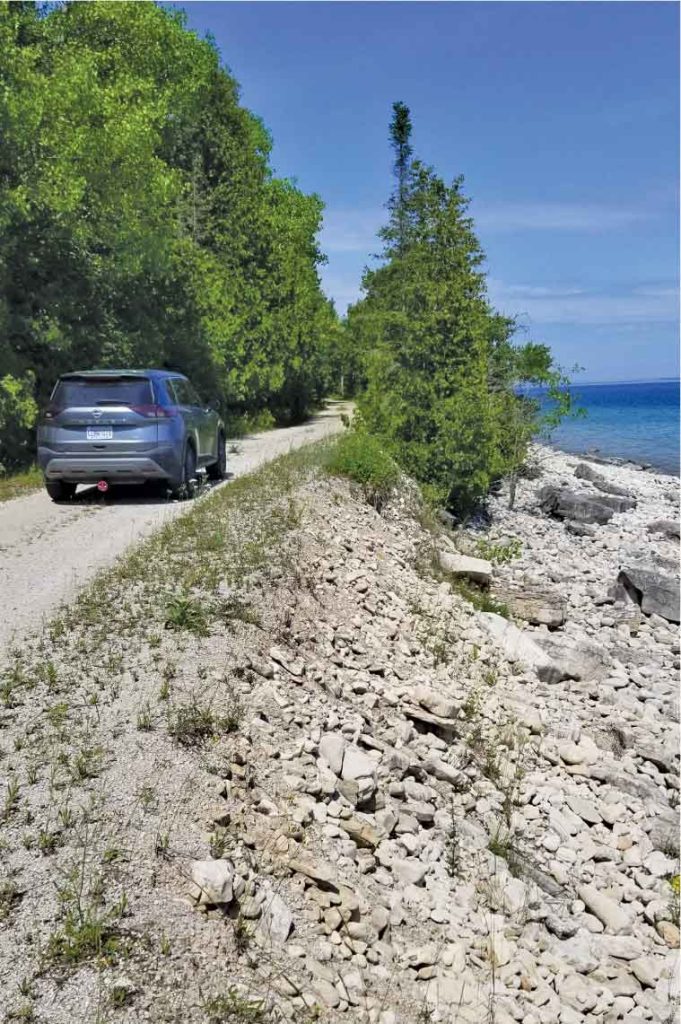
Photo: A section of the Cabot Head Road with a steep embankment will be the most costly to remediate.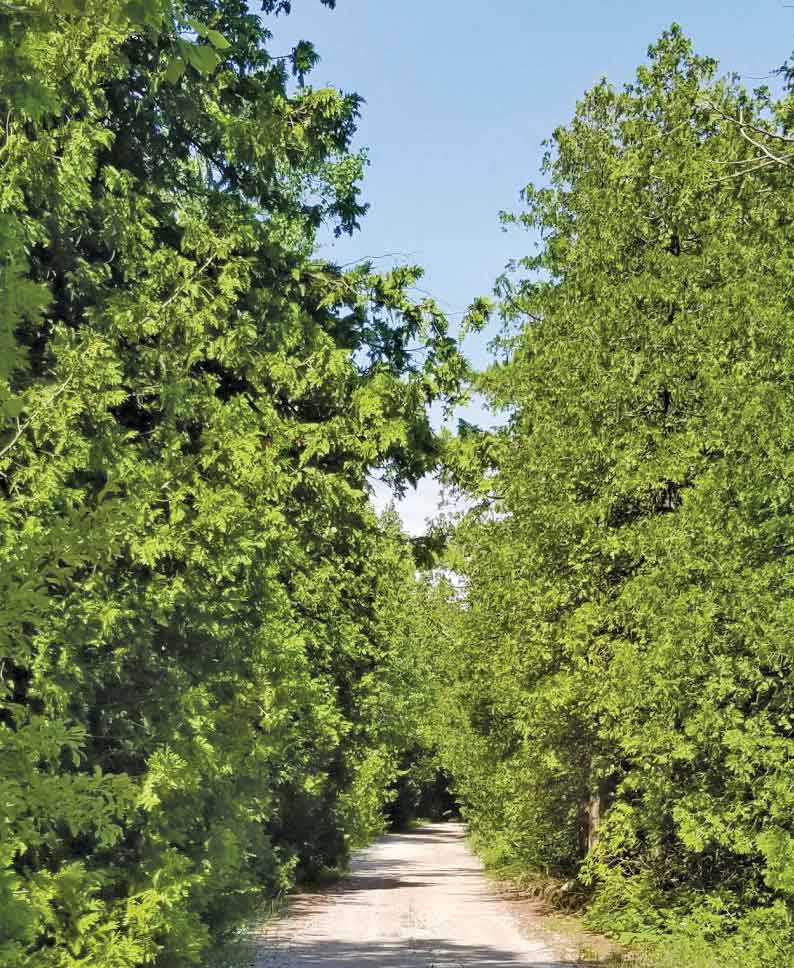
Photo: Cabot Head Road – a single lane gravel road through the cedars.
76% Support a Multi-Use Trail; Doing Nothing Untenable
Over 900 people, mostly residents, completed the Municipal survey on the Cabot Head Road’s future. 76% of respondents support converting Cabot Head Road into a multi-use trail for cyclists and hikers, with controlled vehicle access for authorized users.
Given the public consensus, the Bird Observatory believes a “do nothing” approach is untenable; we encourage Council to exercise its leadership and choose a course of action for Cabot Head Road before the end of August, or the upcoming municipal election may render Council unable to resolve this long-standing matter.
Public Vehicle Access: Safety, Cost and Occasional Shuttle
Cabot Head Road is mainly a narrow, single lane with bends creating blind spots; it is already essentially now a trail. Bringing the “road” up to a standard suitable for public vehicle access will be prohibitive (some estimates exceed $1,000,000) due to stretches of the road with a steep embankment bordering the shoreline. Regulatory approval would also be required.
BPBO agrees with the Dyer’s Bay community that improvements would not address the serious safety concerns of public vehicles and cyclists sharing the road. Creating pull-offs to allow two cars to pass is impractical given the legal requirement to work within Municipal wheel track rights and the limited space between Georgian Bay shoreline and Niagara Escarpment cliff.
In contrast, improving Cabot Head Road to official status as a trail would be relatively easy, costing around $150,000 which could be funded by the Municipal Accommodation Tax.
BPBO recognizes the disabled and elderly could not bike or hike to the Cabot Head Lighthouse. However, spending the resources to open the narrow road in the spring and fall to public vehicles is not a good compromise. Instead, an occasional shuttle service could operate like a guided tour, reducing potential for ecological damage, fires, vandalism and attempts at overnight camping.
Fortunately, the Municipality already has experience operating a shuttle and reservation system. Details need to be worked out.
Road is Essential to Protect Bird Populations
Cabot Head is a key biodiversity area where BPBO has gathered standardized, high-quality bird migration data for 25 years. Protecting and recovery of populations of birds depends on good science and BPBO has reliably contributed data to the Canadian Migration Monitoring Network and the Canadian Wildlife Service that informs national and regional population trend analyses.
“Without road access, the Observatory would have to stop its long-term migration monitoring research at the Cabot Head Nature Reserve” BPBO President, Ted Cheskey stated.
Boat access is a logistical impossibility as it is weather-dependent and unreliable. BPBO lacks funding for the marine infrastructure and no suitable dock exists at Wingfield Basin.
BPBO has a contractual obligation with Ontario Parks to have personnel on site during non-migration season. BPBO offers “Stewards” two rustic cottages used by the banding volunteers during non-migration season. Stewardship fees provide income to cover the Station Scientist’s salary. Stewards agree to provide essential site security, deter vandalism, monitor Wingfield Basin visitors, mitigate fire risks, monitor biodiversity and perform light housekeeping. The Municipality distinguishes between short term rentals and the stewardship mission as evidenced by the exemption from the Municipal Accommodation Tax (MAT). The presence of stewards is one reason why the property hasn’t been vandalized.
The Way Forward
BPBO believes the widely supported multi-use trail option is clearly the lower cost choice, and with the addition of an occasional shuttle service, would provide access to local residents while protecting the environment, the Dyers Bay community, the safety of hikers and bicyclists, the Bird Observatory’s migration monitoring program and access to historic Cabot Head Lighthouse.
Bruce Peninsula Press Publisher Emeritus, John Francis, has noted there are few iconic waterfront areas accessible to the public. Without investment, this irreplaceable, stunning shoreline asset will eventually disappear and be lost to everyone.
A multi-use trail along this spectacular Georgian Bay coastline would be a unique legacy achievement of this Council for all to enjoy.