



Submitted by Kelsey Bowles,
Parks Canada Public Relations and Communications Officer
On December 17th, 2024, 44 volunteers and Parks Canada staff participated in the 52nd annual Christmas Bird Count in Tobermory, including in Bruce Peninsula National Park.
The Christmas Bird Count (CBC) is organized nationally by Birds Canada in partnership with the National Audubon Society and runs from December 14th to January 5th every year. The CBC first began in 1900 and is now the longest running community science program in North America with over 2,000 participating locations. The results from the count help provide data on bird population trends and species distribution.

The network of protected areas in Canada, which includes Bruce Peninsula National Park and Fathom Five Marine Park, plays an important role in helping to address impacts of climate change by protecting and restoring healthy, resilient ecosystems and contributing to the recovery of species at risk. Christmas Bird Counts help Parks Canada learn how climate change is affecting birds, helping make evidence informed decisions on conservation and restoration projects in the park.
Despite the somewhat windy and rainy weather, volunteers collectively counted 43 species and 1,342 individual birds at the Tobermory CBC. On average, around 1,607 individual birds are typically spotted, but the inclement weather likely explains lower than usual numbers.
Some of the other notable statistics from the Tobermory CBC that emerged include:
-A record-breaking year for Belted Kingfisher with three observed; last observed in 1988 (one individual) and 1986 (two individuals);
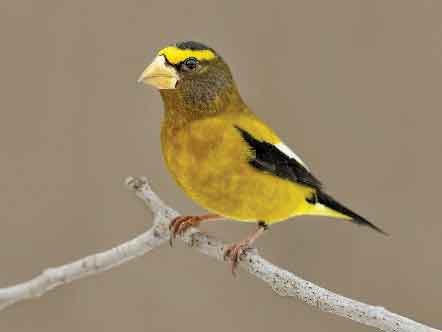
-There were low numbers of winter finches in both the types of species and number of birds spotted with only one Pine Siskin, four Evening Grosbeaks and one Purple Finch;
-The Mourning Dove was absent, which has not happened since 1983;
-There was a low count for Herring Gull, with 87 seen (avg. 248);
-Tied the highest Horned Grebe count with 12 individuals, last experienced in 2007;
-There was a low count for Bufflehead with three observed (avg. 22);
-First count of a Diurnal raptor either a Gyrfalcon or Northern Goshawk was spotted as a “flyover” but was not seen well enough to distinguish the species. However, Northern Goshawk is the most likely of the two;
-First Snow Goose record for the CBC, recorded during the count week (seen a few days before);
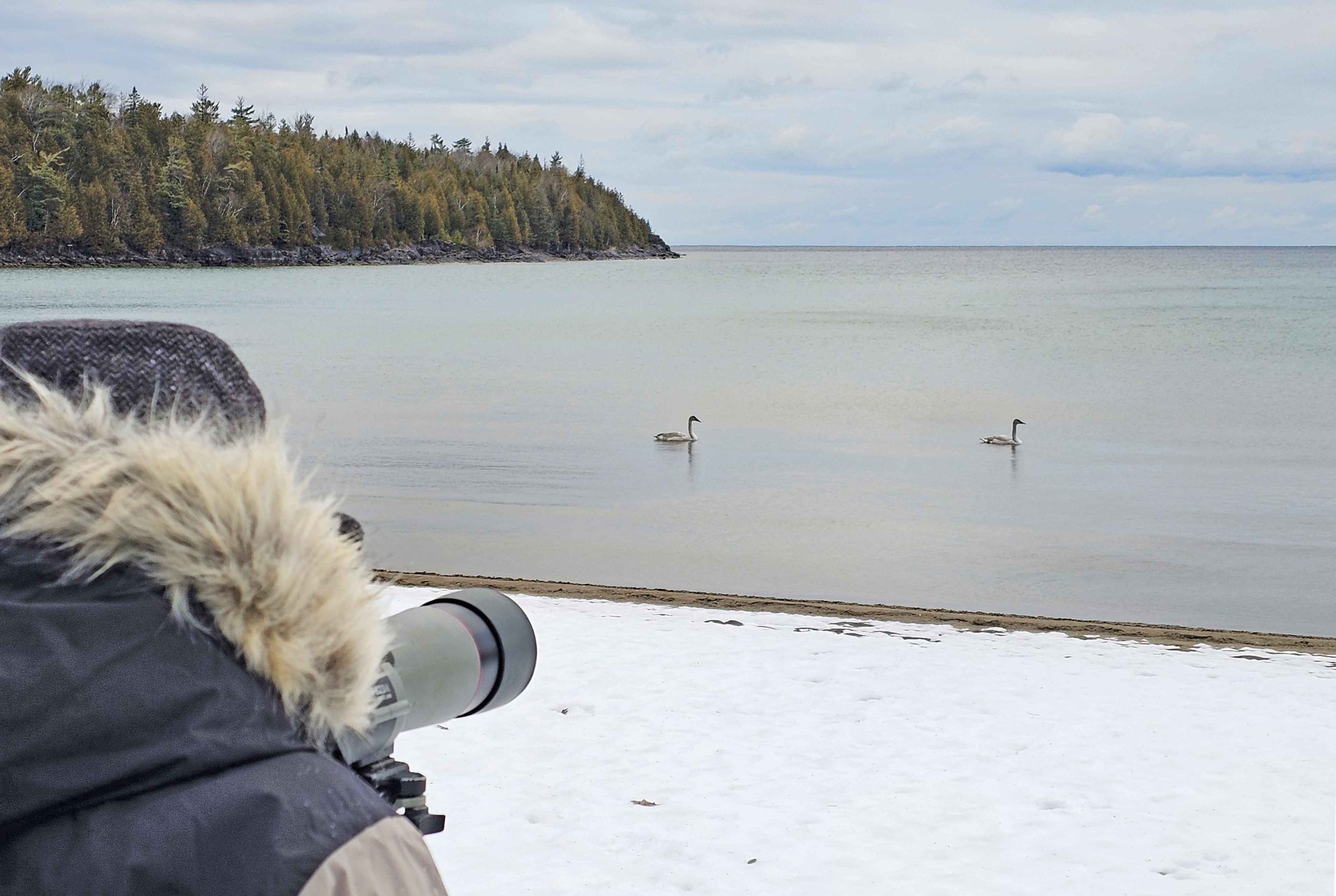
-Third year for the Trumpeter/Tundra Swan (2 observed); the species could not be specified.
Parks Canada would like to thank all the staff and volunteers that took part in this year’s count. Birders of all ages and skill levels joined in on the fun, ranging from 10 new participants to one legacy participant who has been taking part for 25 years!
If you missed out on the CBC this year, there is still plenty of birding to be had. Winter is a great time for birdwatching – less foliage makes it easier to spot birds! You can upload your sightings to iNaturalist and/or eBird to contribute to community science efforts all year long.
And if you’re new to birding, head to the Cyprus Lake campground office and ask about new birding kits available for rent for a nominal fee. These include a set of binoculars, a smartphone adapter for taking photos through binoculars, a birding book, and a comfortable pack to carry it all while you’re out on the trail.
Plan your winter visit to the park with the help of Bruce Peninsula National Park’s winter safety page.
Did you know the Evening Grosbeak is a Species at Risk that sporadically ‘irrupts’ south in the winter? This is when a large number of birds move to a place they are not typically seen due to unusual food availability. Evening Grosbeaks do not migrate in the traditional sense, but when tree seed crops in the Boreal Forest are poor, they can ‘irrupt’ south to Bruce Peninsula National Park and other places to seek additional food.
Christmas bird counts, such as the one recently completed in Tobermory are among various methods that contribute to understanding this at-risk species, which can help lead to their recovery.
See Pike Bay and Cape Chin Christmas Bird Count results here.