



Submitted by The Men’s Breakfast
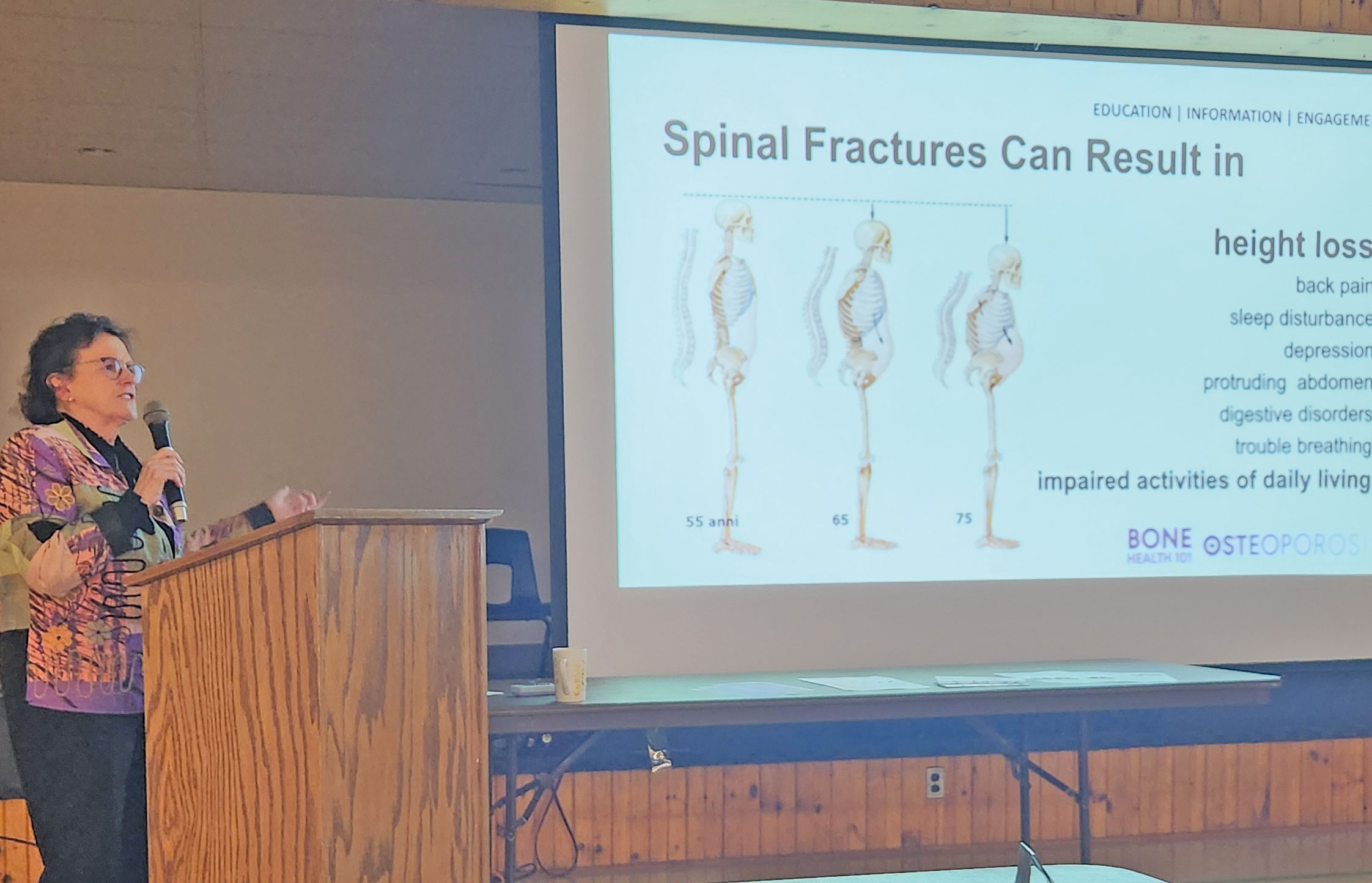
Yes! Even men get it. In fact 1 in 5 men (20%) will have an osteoporotic fracture during their lifetime. This is more common than prostate cancer (1 in 8) strokes, or heart attacks. Nancy Dunbar, currently a volunteer with Osteoporosis Canada (OC) provided an interesting presentation on bone health to the February 10th Men’s Breakfast. She also provided some guidance on how to lessen/minimize decreasing bone density along with exercises to strengthen bones.
Nancy, recently retired from 40+ years of nursing and long-term care, gave up an early winter morning to educate, inform and empower us regarding risk reduction and treatment of osteoporosis, as per the mandate of OC. Osteoporosis slowly weakens bones by reducing bone density making them more porous and more susceptible to fracture. Although typically more common in women, Nancy’s message was for us old guys not to be too smug. Most people go through many years without symptoms, but as it is a progressive disease, without noticeable symptoms, after age 50, 80% of fractures are osteo related. Shoulders, spines, hips and wrists are most susceptible.

Spinal fractures are common and often go unnoticed for long periods. Symptoms of spinal fracture susceptibility include body shortening, forward stumping (curvature), protruding abdomen (may be hard to distinguish from too much beer consumption!), digestive disorders, and trouble breathing. It is recommended that after age 50, one should consider having a bone density test.
Osteoporosis management is a lifestyle choice: good bone and muscle health are dependent on good nutrition and exercise. Calcium, vitamin D and proteins are particularly important for supporting good bone health. Thus, milk and other dairy products (cheese, yogurt, etc.) are essential to help maintain bone density. Proteins, including meat, fish, almonds and so on are also important to maintaining good bone density. Vitamin D is also important so be sure to get outside when the sun shines (which has been a rare occurrence this winter!). Direct food consumption and direct sun-time are preferable to vitamins and supplements which are not considered as effective.
Exercise is also very important particularly in order to maintain good posture and balance which help minimize falling. Strength training using weights, exercise bands, and lifting against gravity helps strengthen bones and muscles along with moderate to vigorous weight-bearing aerobic exercises of at least 30 minutes duration.
Osteoporosis Canada’s web site (www.osteoporosis.ca) provides excellent guidance including information on specific topics, recommendations and webinars. As noted above, nutrition and exercise are very important and the website provides specific guidance on these including the provision of a calcium/protein calculator and recommended exercises (https://osteoporosis.ca/bone-health/).
Unfortunately, the worst storm of this season (so far) arrived in the evening and early morning hours leading to our planned January 13th Men’s Breakfast. We apologize for any inconvenience in cancelling at the last minute but the kitchen crew arrives at 6 AM and the four feet of snow at the end of my driveway beckoned for more bed time!
We are very excited to announce that our next breakfast – March 9 – will feature a photo exposition by the best wildlife and scenic photographer on the peninsula: Ethan Meleg. See you at 8 – 8:30 for coffee and mingling.
If you are planning to attend, it would be helpful if you let us know, by contacting Martin at hogarth@auracom.com.