




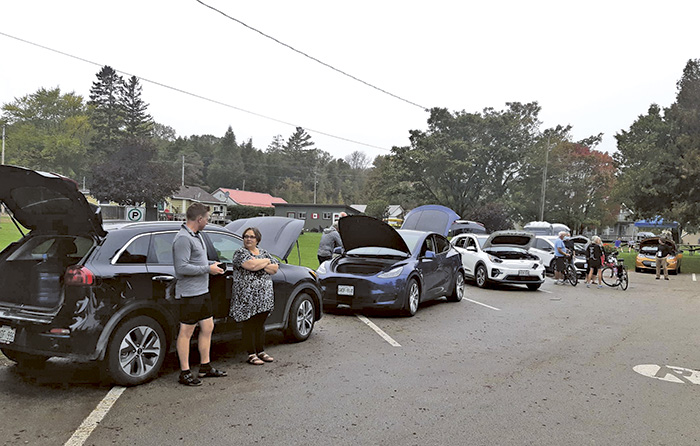
Submitted by the Bruce Peninsula Biosphere Association
In a survey conducted this year by the Bruce Peninsula Biosphere Association, 50% of respondents indicated their willingness to make their next vehicle an electric vehicle (EV). Why are people making the switch, and what are the primary concerns for consumers looking to go greener? Drastically reduced fuel and maintenance costs, along with the elimination of fossil fuel emissions were cited as the most common reasons for considering making the switch.

Concerns over EV ownership, including the initial expense, range anxiety, charge availability, and battery manufacture are valid considerations. In the Biosphere survey, respondents cited the price of EVs as the primary barrier, even among those who plan to make an EV their next vehicle. Industry analysts with eyes on the market have seen EV battery costs tumble 90% over the last decade, and with more manufacturers making EVs all the time, the price of electric alternatives is estimated to fall below gas-powered vehicles in the next two to four years.
Costs examined over the lifetime of the vehicle also have to be considered. A simpler, cleaner engine means a 50% reduction to maintenance costs, and fuel costs for an EV are slashed by up to 70% compared to traditional vehicles. Looking at lifetime averages, EVs are actually less expensive than their gas alternatives, even with a significantly higher initial price.
The Biosphere survey also heard concerns about EV infrastructure — specifically charger availability. Those who own an EV typically will do most of their charging at home or work. This is a shift in driving mentality that is more concerned with “destination/home charging/fuelling” versus “fuelling-on-the-go”, as has been the norm for the past 100 years. Level 3, or fast-charging stations (full charge in about 30-40 minutes) are only useful for long-haul trips, and not the 99% of day-to-day driving. Here on the Peninsula, the Biosphere oversaw the installation of 50 additional Level 2 chargers (full charge in about 6-7 hours) between Wiarton and Tobermory at various tourist accommodations. These are destination chargers that give visiting EV motorists peace of mind when they vacation on the Peninsula.
Electric vehicles are better for the Peninsula, better for the province, and better for the planet. They’re clean to run, easy to maintain, and far cheaper to fuel. The move from fossil fuel-powered vehicles to electric is happening in the same inevitable shift that took Ontario’s power grid away from coal (reducing greenhouse gas emissions by 30 megatonnes annually and slashing smog advisory days by 98% in the last seven years). If all NBP motorists were able to make the switch to an EV, we would see our local emissions drop by as much as 58%. Moreover, we have an opportunity to shape a burgeoning industry that may one day see Ontario as a key player — one that still has time to be so much better than what came before.