





It was with great interest that we read the August 11th article in the BPP “MNBP Bans Parking on Moore Street and Little Cove Road”. As property owners bordering the Gap, we feel that comprehensive action to address overcrowding issues emanating from all municipal public access areas is called for. This should include, but not be limited to the Gap, Big Tub Lighthouse, Dunks Bay, Mermaids Cove and the Bay Street swimming platform. All of these areas and their neighbours are negatively impacted by the influx and a comprehensive solution needs to be enacted for all of them. The best solution for a “whack-a-mole” problem (as described by Mayor McIver) is to whack all of the moles at once.
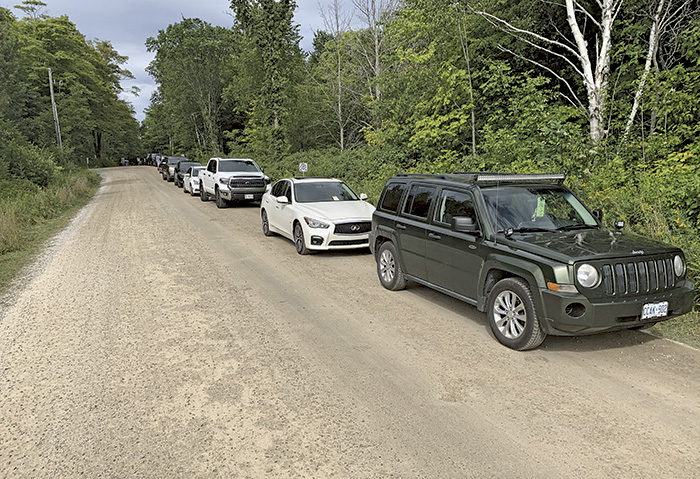
CAO Van Mierlo-West has suggested social media has attracted crowds to public access areas that were never designed for the masses overrunning them. Traditionally the municipality has ignored these public areas and the disturbances they create for local residents like they are ostracized illegitimate children. Bylaw enforcement is patchy at best between 8:30 and 4:30 Monday to Friday. Night and weekend access is completely unregulated and unsupervised by the municipality. Municipal staff direct us to the OPP for overnight enforcement, but the OPP are patrolling the entire peninsula and generally don’t show up for at least 45 minutes after being called. Local residents are left to serve as late night watchmen, bouncers and janitorial staff.

If the Municipality would take responsibility to manage these properties, it holds all the keys to assembling a comprehensive multifaceted strategy to moderate their impact on the local community. To get things started, here are my suggestions.
1. Enforce Parking Limits with Towing
During the day, the best way to limit access to these areas is to have time limited parking to allow reasonable access, bracketed by no parking areas that are strictly enforced by towing with high fees. For visitors from the GTA, a $40 parking ticket (the current municipal rate) is equivalent to what they would pay for lot parking in downtown Toronto. It has no deterrent value. At the Gap, “No Parking” signs have been posted for years but are regarded by some visitors as if written: “No Parking (unless you really want to)”. I visited Little Cove on Aug. 18th and found 20 vehicles parked in front of “No Parking” signs. An expensive and inconvenient stay for your car in a compound is a deterrent everyone can understand. It’s true that in some areas people will still likely walk in, but the added effort may discourage all but the most committed.
2. Establish Obvious Boundaries
The municipality should provide barriers and signage distinguishing the boundaries between public and private areas. Up until now it has been left to the private property owner to put up signs to keep people from trespassing onto their property. These have met with limited success and there are still daily incursions. If the municipality is allowing their property to be public access it should be their responsibility to establish boundaries with signage and structures if necessary.
3. Prevent Late Night Access
Late night disturbances are a particular burden for those local to these public access areas. Despite investing $7000 in noise-reducing windows, we are typically awoken almost every night between 1:00 and 3:00 AM. There are two general categories of late night visitors: people who don’t know they are in residential areas, and people who know, but don’t care. The former show up anytime overnight, but generally leave with apologies when they are approached. Last year, people in the latter category would show up after the bars closed, but this year it’s anytime after 11:00. Their arrival seems to be part of a late night ritual, and they can be quite aggressive and entitled. The sun is gone after 11:00 PM, and visitors should be too. There are obvious risks involved (and potential liability) when combining drunkenness, large groups, treacherous rocks and deep cold water in the dark. Sound carries long distances on the water and emanates from three epicenters in our area; the Gap, Big Tub Lighthouse and the Bay Street swim platform. Given how loud all of these areas are to us, we would expect the entire shoreline and local community to be impacted by even just a few loud revelers.
A bylaw that would restrict access to public access areas from 11:00 PM to 8:00 AM should be clearly stated on signage, which would identify the areas as “neighbourhoods”. Courteous folk will be respectful. Those determined to stay will likely be quieter as they will recognize a consequence to disturbing residents. They will also have no excuse when late night enforcement arrives.
4. Late Night Bylaw Enforcement
Late night bylaw enforcement is required well after midnight, particularly on the weekends. Its presence would dissuade the late night drunken visitors and disrupt their ritual patterns. A late night bylaw officer could check on these locations at times in the evening when people are likely to show up. They can also enforce the noise bylaw in the greater community. Many residents have identified overnight noise as a widespread issue related to STAs but, in our experience, it is emanating from these public areas as well.
I suspect some visitors are using social media to market Tobermory to their demographic as something akin to the Grand Bend experience of 40 years ago. Those who disregard common courtesy are disruptive not only to residents but also families, couples, and destination travelers visiting these sites during the day and boarding in motels and STAs overnight. There is a risk that the public’s image of Tobermory’s character could suffer.
But social media can also be used to our community’s advantage. Properly executed limits and enforcement deployed by the municipality may translate into social media posts about the consequences of infractions, and word will get out that Tobermory is serious about managing access to these sites to ensure a positive experience for everyone.
Jonathon Stewart