



Submitted by Brian McHattie
Despite incredibly rainy weather and a power outage, we had a good turnout at October’s Men’s Breakfast with a handful of new attendees! This is a good time for us to thank the Municipality for installing a top-notch new generator at the Tobermory Community Centre – never did a breakfast taste so good!
Our speaker, Bill Caulfeild-Browne, shared slides from his two trips to an African country that many of us know little about, Namibia. Namibia is a southern Africa country: its western border is the Atlantic Ocean, sharing land borders with Zambia and Angola in the north, Botswana to the east and South Africa to the south and east. Namibia is governed by a multi-party parliamentary democracy, although with relatively few people (2.6 million), it is the second-lowest population density of any sovereign country, after Mongolia.

The country is known for ecotourism, which features Namibia’s extensive wildlife, featuring the largest free-roaming cheetah and black rhino populations in Africa and one of only two countries where you can find specially-adapted desert elephants.
Namibia is one of few countries in the world to specifically address conservation and protection of natural resources in its constitution. Article 95 states, “The State shall actively promote and maintain the welfare of the people by adopting international policies aimed at the following: maintenance of ecosystems, essential ecological processes, and biological diversity of Namibia, and utilisation of living natural resources on a sustainable basis for the benefit of all Namibians, both present and future.”
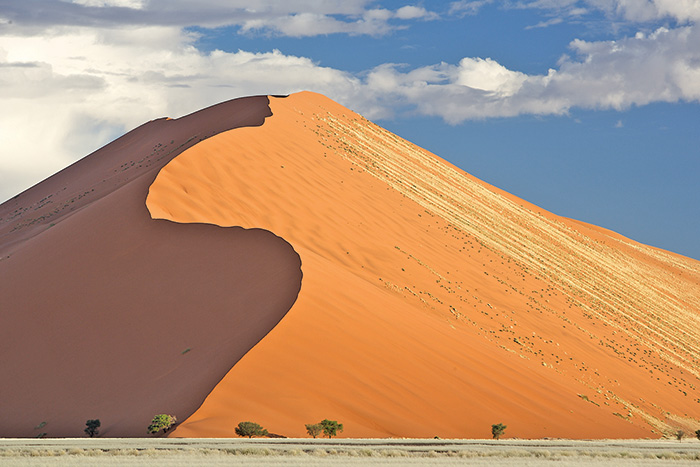
Being situated between the Namib and the Kalahari deserts, Namibia has the least rainfall of any country in sub-Saharan Africa. Namibia’s Coastal Desert is one of the oldest deserts in the world. Its sand dunes, created by the strong onshore winds, are the highest in the world at 200-300 feet (Bill’s photo here of Dune 8 in Namib Naukluft National Park shows this beautifully). The Skeleton Coast is associated with shipwrecks (of interest to Fathom Five fans!), and stories of sailors walking through the desert in search of food and water. The name is derived from the bones that lined the beaches as a result of whaling operations and seal hunts. The blinding fog typical of this coast results in ships running aground or wrecking on the off-shore rocks.
The next Men’s Breakfast is Saturday, November 12 at the Tobermory Community Centre. Our speaker is Peggy Van Mierlo-West, Chief Administrative Officer for the Municipality of Northern Bruce Peninsula. If you are planning to attend the Breakfast, please let Martin know at hogarth@amtelecom.net. Breakfast is at 9, coffee ready at 8 a.m.