

Submitted by Peter Allemang
on behalf of BPEG Media
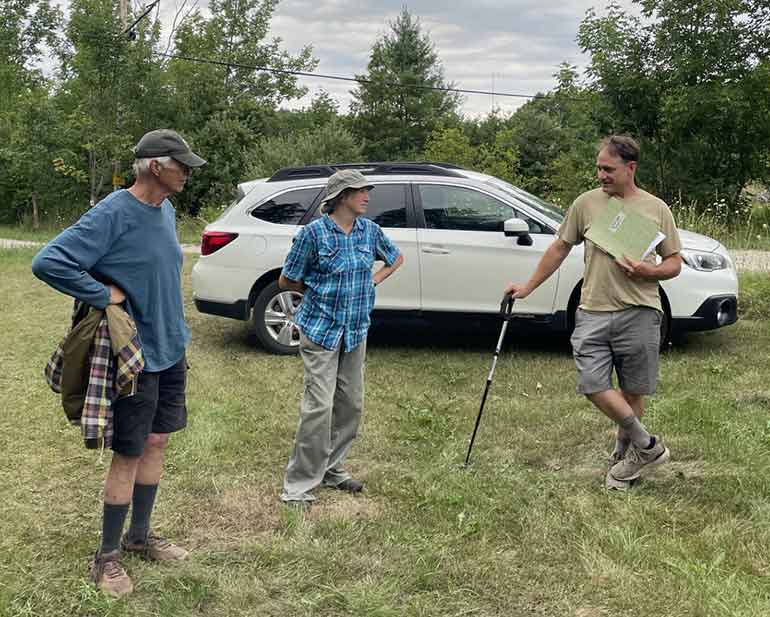
On the overcast, windless twilight of August 5, 2026 amidst the hum of mosquitoes and dragonflies, over two dozen guests toured Bird’s Nest Farmstead. There for 25 years on a thin-soiled field surrounded by forest, Peter Allemang and Erin Gundy have explored how to eat with ecological integrity. Their guests represented the Bruce Peninsula Environment Group (BPEG)and other keen associates.
Allemang started the tour at the “dead hedges.” Made during Covid -19 lockdown, these are stacked walls of tree branches which trap snow and dust placed over almost exposed bedrock. The hedges create habitat: fungal-based soil, shelter and moisture for vines, fruit and nut trees that grow on the leeward sides.

Then the group ambled below the escarpment on a level, treed stretch of the Bruce Trail. Allemang revealed how 11-12,000 years ago, cold glacial Lake Algonquin pounded rocks smaller and smaller until a cobble beach resulted. The glacial lakes left thin sediment atop the escarpment which nursed cold-hardy grasses and herbs, later on trees, and much later European field plants.
Back on top of the escarpment after dodging drizzle, the group paused in a narrow field between fingers of forest near a planted 30-foot tall red oak. For 4000-5000 years between post-glacial and modern times, the climate grew warmer and drier. Trees like oaks that were well-adapted to drought and fires formed savanna-type habitats similar to the small field where the group stood.
Savannas—park-like areas where the trees shade less than half of the ground space—were prolific in prehistoric times in southern Ontario. Forests capture carbon, but Allemang outlined how savannas also support more biodiversity, mammal habitat and create more soil. When the climate eventually cooled, forests threatened to engulf them. But these fruit and nut-rich open lands were maintained by indigenous stewards who judiciously set fires to maintain such “wild” food gardens.
The tour traversed to where Gundy especially and Allemang had installed annual vegetable gardens (akin to “weeds” in a savanna) and related structures. From there, they walked out to a pasture. Chickens and sheep were confined to an area about the size of a tennis court or two within a moveable electric fence. Allemang opined that every healthy habitat needs animals stewarded by wild predators or human managers. The livestock reprise the role of wild ruminants and birds while fertilizing the soil. The tour’s youngest participant, Alice Greig, harvested one fresh egg.
To highlight a landscape design called silvopasture (like an agricultural savanna), Allemang showed rows of woody plant varieties he had planted over the past decade. As time passes, they provide increasing shelter, shade, and food for domestic livestock, people, and wildlife.
The tour finished near the house where participants enjoyed Gundy’s beautiful flower beds, some beverages, and asked remaining questions. As they returned to their parked cars, they had food for thought while they sought not to be mosquito fodder just before dusk.