



Submitted by Donna Dilschneider
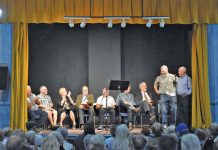
About 65 people came out on a cool and wet Saturday, April 22, to hear expert presentations on ways to support and nurture Mother Earth.
The Bruce Peninsula Environment Group’s (BPEG) Earth Day at the Lindsay Tract featured talks on permaculture, composting and Métis traditional plant use, and included information booths, delicious food and a couple of woodland hikes to wind up the day.

Starting off the program, Peter Allemang, who with Erin Gundy operates Birds Nest Garden Farm near Purple Valley, talked about their experience with permaculture, or what is now being called regenerative agriculture.
Permaculture, Peter explained, depends on “perennial agriculture” rather than “annual agriculture”, drawing from science, ancient cultures and Indigenous practices. It seeks to remedy the damage caused by grain agriculture and destructive grazing, using no tilling, chemical fertilizing, pesticides, or weeding. Grain agriculture does the opposite of what nature does, and depletes the soil. “Plowing wrecks stuff in all kinds of ways,” he said.

Often the problem is the solution, Peter said. Slugs? Get ducks. Weeds? Cooked greens. Plant oak trees, they protect more insect species than any other tree.
He cited a number of resources on permaculture, in particular the website, permies.com, which is full of information and enthusiastic members.
Nurturing the soil means composting and Jim Kuellmer has become a master of it since he and Jan MacKie acquired their country property at Rush Cove many years ago.
Jim described composting as the conversion of biological waste into humus. Pick a site away from your house, build a couple of bins so you can alternate — larger is better — add food waste for nitrogen and dry plant matter for carbon and turn every few weeks. Protect from sun and rain but keep moist.
The proper mix of nitrogen and carbon is important while other products can be used to add nutrients; red wigglers (manure worms) help with decomposition.
It can take a couple of weeks to a year but once ready spread it on your soil and rake lightly but don’t dig it in.
Jim noted that agricultural soils should be 5 percent organic matter like they were 100 years ago, but have dropped to 2 percent today. Healthy soil holds three times more water than poor soil.
He pointed out that composting keeps household waste out of landfills, where it does not decompose. Landfills emit a whopping 15 percent of our carbon emissions.
Jenna McGuire, Métis historic researcher, wildlife biologist, botanist and artist, shared some of her vast knowledge of traditional Métis use of plants and stressed the benefits of Indigenous input in the stewardship of our fragile lands.
In the Métis culture, plants are more than food, they are also a source of medicine, textiles, and household tools. At least 90 percent of wild plants are of use but they require careful harvesting — take them right, use as much as you can and give back.
An area of Saugeen Bruce once rich with cranberries, for example, is now a Hydro corridor and the cranberries are gone. And harvesting plants solely for their medicinal properties has resulted in inappropriate pharmaceutical practices.
“Plants mean so much more than whether we can use them … they depend on each other,” she said. Even non-native plants have value if properly managed.
In describing the rich biodiversity of the peninsula and its teeming-with-life wetlands, Jenna remarked that canoeing here “is like being in a grocery store, plants or food are everywhere.”
Jenna lives in an historic Métis family home on the shore of Lake Huron in Southampton where she has a teaching garden of 50 different species of native plants, a collection of rocks, products she makes from plants, and other treasures.
Throughout the day, BPEG, North Bruce Peninsula Biosphere Association, Peninsula Pollinator Partnerships, Peninsula Bruce Trail Club and North Bruce Municipality dispensed information from booths set up around the meeting hall, where a wood stove staved off the chill.
Thanks to Mary Hewton of The Booth, and Molly Bridge of Garden in Thyme for the delicious food, to hike leaders Jenna McGuire, Sean Skinkle, Saabir Sohrab and Tyler Miller, to the many volunteers who kept things running, and to a long list of community sponsors who helped cover the event’s costs.
For more information, including morning presentations, check the www.bpeg.ca web page.