



John Francis,
Bruce Peninsula Press
Everybody’s a fan of Monarch butterflies. We all want to do our part to help them survive. We’re all careful to help their host plant — milkweed — proliferate so that Monarchs will have lots of places to lay eggs and the hatchling caterpillars will have lots of leaves to eat.
But Monarchs aren’t the only ones to benefit from abundant milkweed. The Milkweed Tussock Moth would also like to thank us for our hospitality.

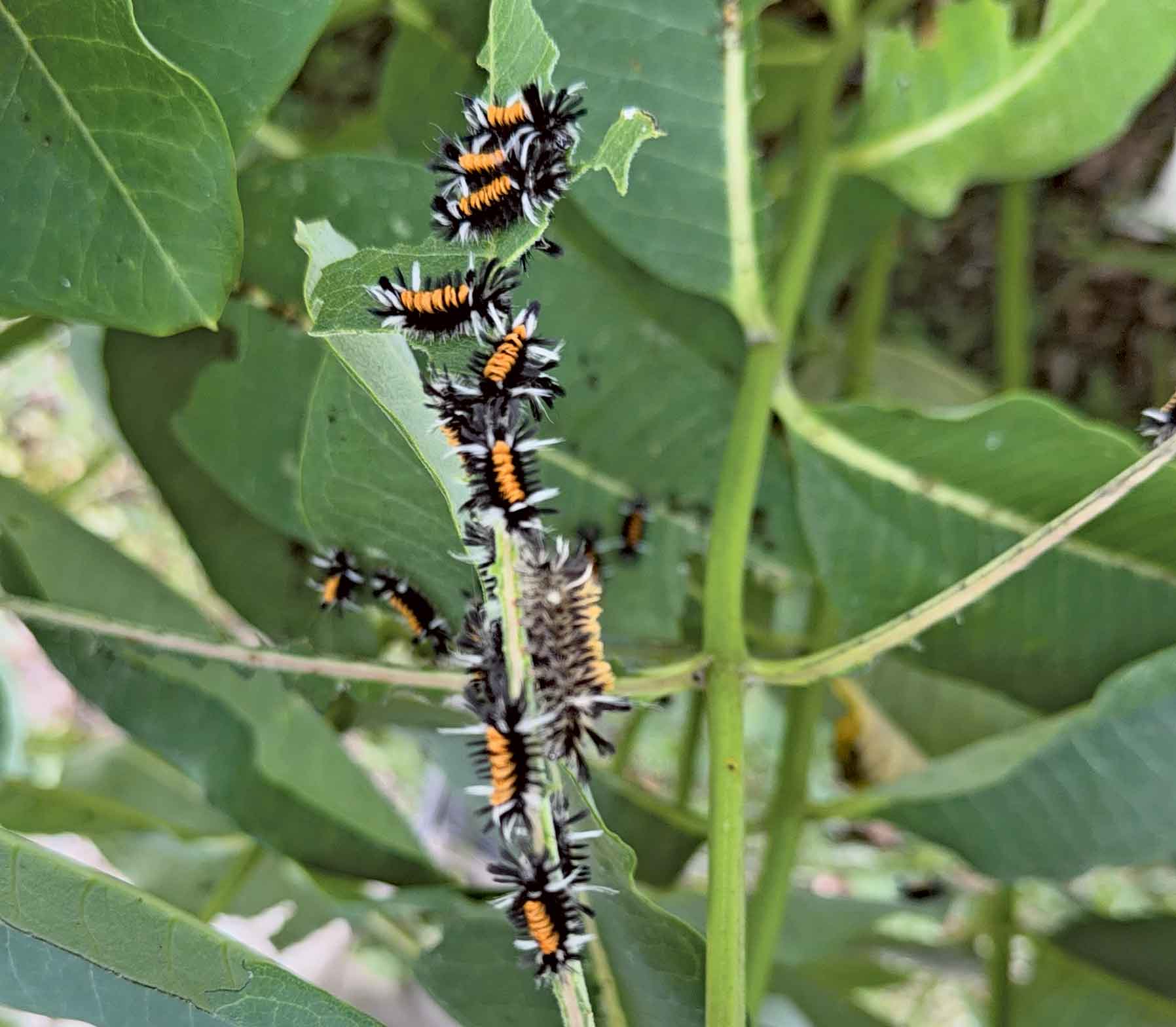
Milkweed Tussock Moths (aka Milkweed Tiger Moths) are taking advantage of all that milkweed and are becoming quite abundant. So is this a problem for the Monarchs?
Apparently not. Monarch caterpillars mostly eat young, growing leaves. Milkweed Tussock Moth caterpillars mostly eat the larger, older leaves, which they absolutely demolish. So it appears that the two species coexist in harmony.
Monarchs lay single eggs on the underside of young, growing milkweed leaves. As a result, Monarch caterpillars are mostly solitary. Female Tussock Moths lay masses of eggs on the undersides of older milkweed leaves, which results in large numbers of caterpillars which frequently strip the older leaves down to the central vein.
Both species incorporate the unpleasant/toxic chemistry of the milkweed into their bodies for self-defense. As a result, both the Monarch and the Milkweed Tussock Moth have little to fear from predators.
Jenna McGuire has an excellent piece about the venomous hairs of the closely related Hickory Tussock Moth. (See the Sept 26 entry on McGuire’s Illustrated Guide on Facebook.)
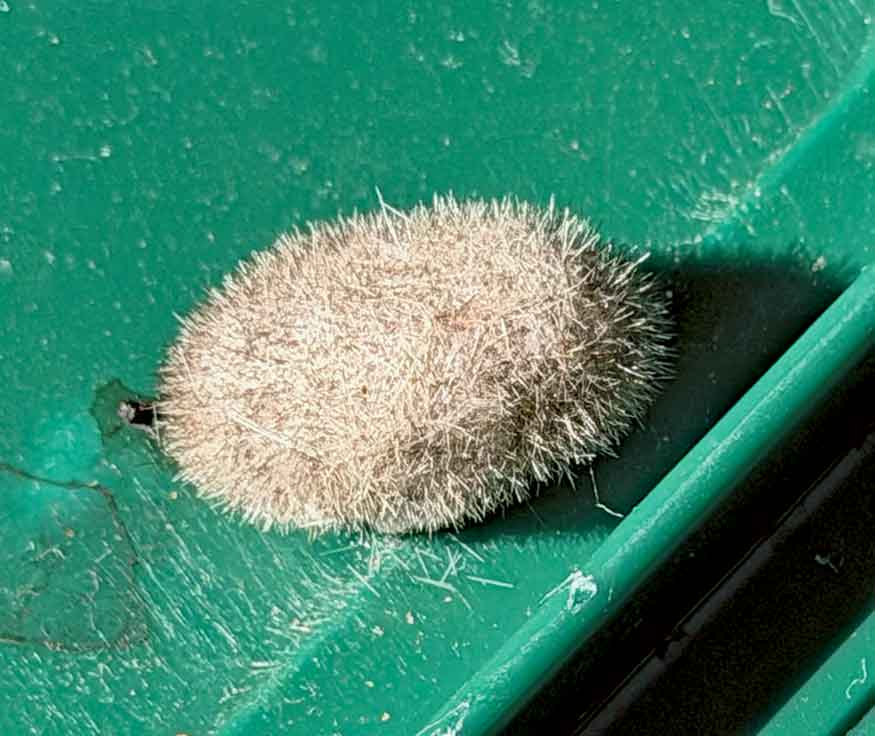
This suggests that it’s probably not a good idea to handle Milkweed Tussock Moth caterpillars or pupae. Enjoy watching them but keep your hands to yourself.