
Joanne Rodgers, Bruce Peninsula Press
Northern Bruce Peninsula community members and those of the neighbouring communities of Wiarton and Owen Sound accepted the invitation extended by the Chippewas of Nawash Unceded First Nation to join them at Cape Croker Park “for an evening of remembering, learning, sharing and connection.”
On September 30, 2026, the 6th National Day for Truth and Reconciliation, the Park grounds at Neyaashiinigmiing were filled with Nawash members and their neighbouring community members wearing the signature orange shirts, which has become integrally tied to the commemoration of this solemn day.

The support for ‘Orange Shirt Day’ is inspired by the story of Phyllis Webstad, whose new orange shirt was taken from her on her first day at a residential school in 1973. It honours the survivors and victims of the Residential School System in Canada and reminds us that “Every Child Matters”.
Nawash Chief Veronica Smith opened the ceremony, saying it was a day for reflection and to honour the children that did not make it home and for those that did make it home but carried deep scars. She related how the “removal of culture, language and identity through violence and genocide has impacted heavily on our children, on our families, our people and our First Nations across Turtle Island.” She also stated that only 15 of the 94 calls to action itemized by the Truth and Reconciliation Commission have been addressed.
Nawash children performed a drumming song ‘You are remembered” in their native Ojibway language.
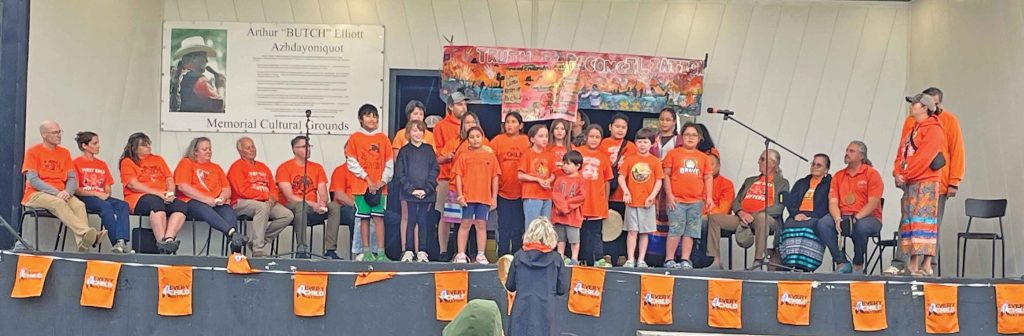
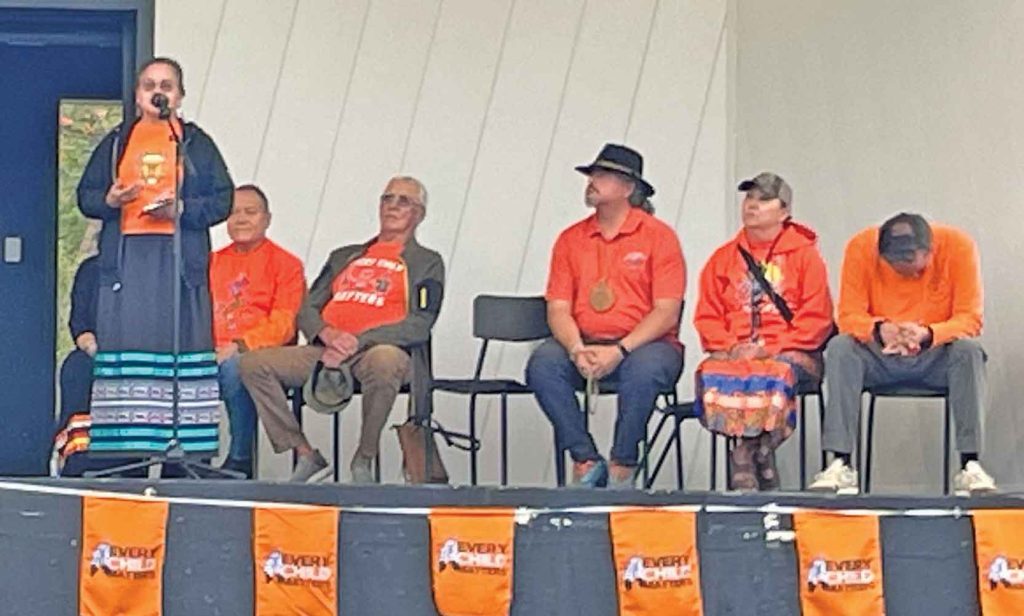
Nawash Elder Lenora Keeshig-Tobias talked about the right to tell their own stories and recited an original poem alluding to common stereotypes about the indigenous peoples entitled “Goodbye Wild Indian”.
Co-MC Chris Ashkewe reminded the attendees that this day is not solely an Indigenous day of remembrance but of its importance to all Canadians.
Caley Doran recalled his family’s experience with the Residential School in Spanish, Ontario. He related how his mother Merceline Nadjiwon Doran, a survivor of the school and a foster child, returned to her community, but even when she decided to become a nurse, had to beg permission from the Indian Agent to leave the Reserve. After a year and half of asking, she eventually went on to become one of the first First Nations nurses in Canada. During her tenure at the Wiarton Hospital, she welcomed many of the Nawash newly born babies and at times had to protect them from Canadian child services.
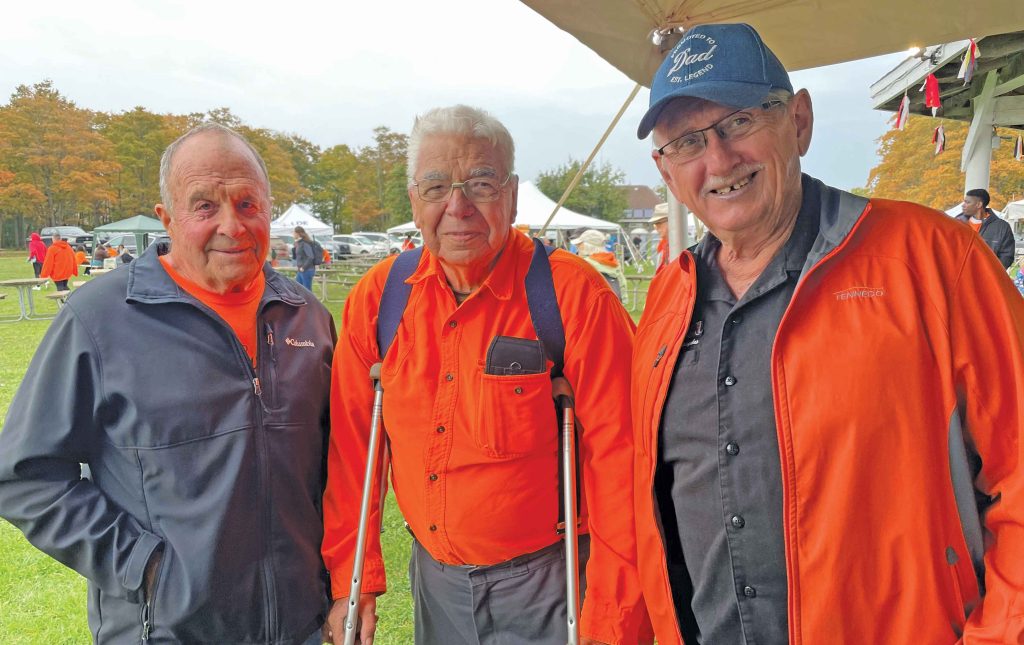
Photo: Nawash Elder Howard Jones (middle) with his friend, Mayor Milt McIver, and former schoolmate Dave McCoy.
Doran led attendees through a heartfelt Land Acknowledgement. He requested that everyone bend to touch the land, reach to the sky, turn around and acknowledge those around them. He feels deeply that any land acknowledgement should show sincerity and respect to the land, to relationships, and to all living creatures. He says “words are powerful, but actions speak louder.”
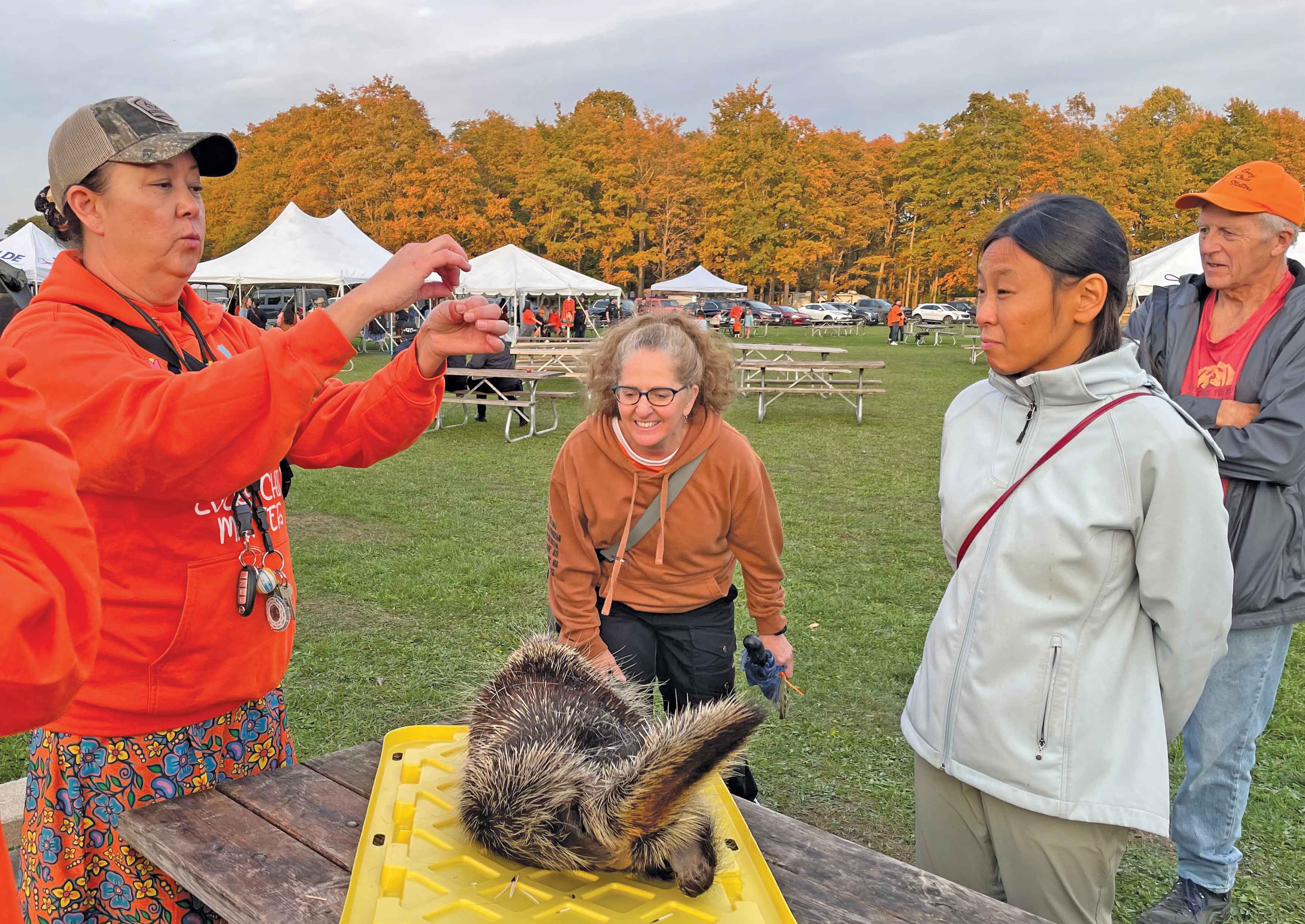
All attendees participated in a sumptuous roast beef supper and enjoyed social time. Participants also visited the many booths showcasing cultural practices and traditional arts and crafts such as sweetgrass braiding and porcupine quills crafting.
After supper, there was a Walk through the Park’s trail lined by orange-tinged maple trees to “honour the Survivors, intergenerational Survivors, and those who did not return home.”