



“Birds By The Bay” Presentation September 19th at Parks Visitor Centre
Submitted by Elizabeth Thorn
What happens over your head at night? While you sleep, thousands and thousands of birds fly overhead in the dark sky. Following invisible aerial highways, every spring and fall, they are moved by a strong instinct to reach their distant destinations.

You’re Invited to “Birds By The Bay”, a presentation by Bruce Peninsula Bird Observatory on September 19th, 2 pm at the National Park Visitors’ Centre in Tobermory. Dr. Stéphane Menu will reveal the magic of bird migration.
The Bruce Peninsula Bird Observatory (BPBO), a local charity, has been studying bird migration since 2001 at its Cabot Head Research Station, on the northeast tip of the Bruce Peninsula. Every morning during spring and fall migration, dedicated volunteer birders wake before dawn to begin migration monitoring under the expert guidance of Station Scientist, Dr. Stéphane Menu.
Now in its 25th year, fall bird migration monitoring began at Cabot Head on August 15th and will go on until October 31st. Spring migration is a shorter period – April 15th to June 10th. The migration monitoring, follows a strict scientific protocol, involving a combination of observation and banding.
How many bird species? What is your guess? 100? 150? 200?
In 25 years of monitoring, BPBO has documented 263 bird species!
The daily spring and fall migration monitoring provides a treasure trove of data, illuminating which species of birds migrate through the northern tip of the Bruce Peninsula, how many individuals and when they are passing through, and in which conditions. This data, fed into a national database, helps identify birds at risk and inform bird conservation strategies.
Which bird is BPBO’s frequent flyer? Have you seen it?
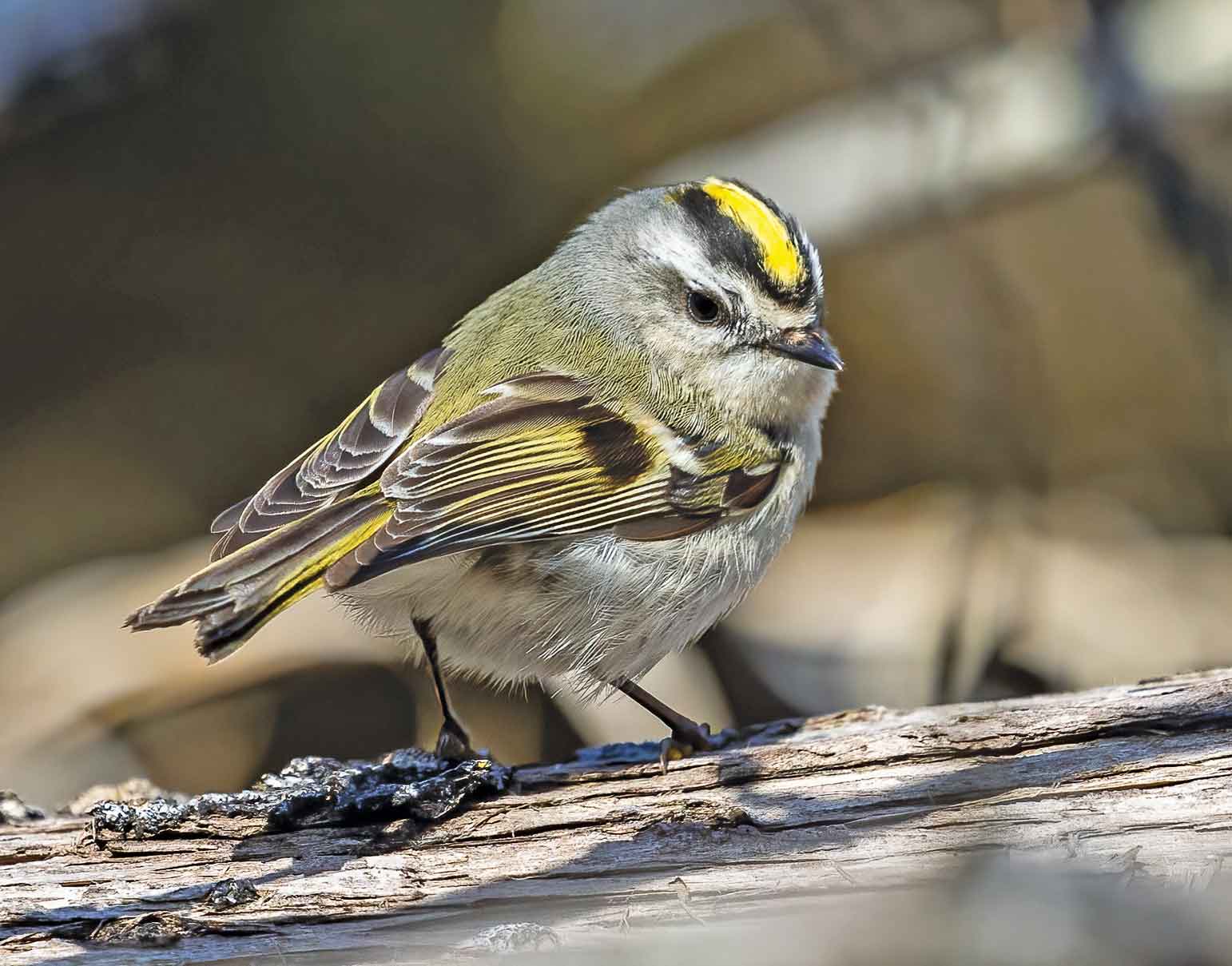
Among the many species of birds, about 12,000 Golden-crowned Kinglets have been banded since 2001, a reflection of how abundant they are in the area. They have a short migration, spending the winter in southern Ontario and eastern USA, with a few of them staying on the Bruce Peninsula.
By contrast, American Redstarts, a very common local breeder, have a long migration, leaving our shores in late August and early September for Cuba and other islands of the Caribbean: we, humans, are not the only ones wanting a break from the long, cold, and snowy Canadian winters.
About 6,000 American Redstarts have been banded in 25 years and many more have been observed, allowing us to say, for example, that the first American Redstart to return at Cabot Head should be seen between May 8 and 10.
With BPBO’s band on their legs, birds become individuals and can be tracked over time and space (if they are recaptured of course). For example, the female American Redstart with the band 2930-13347 was first captured on August 24, 2021. Since then, she has been recaptured in spring of 2022, 2023, 2025 and 2026, showing a strong fidelity to Cabot Head!
There are so many more stories to tell from the 25 years of bird migration monitoring at Cabot Head. So remember you are invited! Speaker Stéphane Menu, BPBO Station Scientist, September 19th at 2:00 PM at the Bruce Peninsula National Park Visitor Centre.
Not a Ted Talk but a Stéphane Talk ! No charge!