


Learning New Ways to Make and Shape the Peninsula Section of The Bruce Trail
Submitted by Tamara Wilson
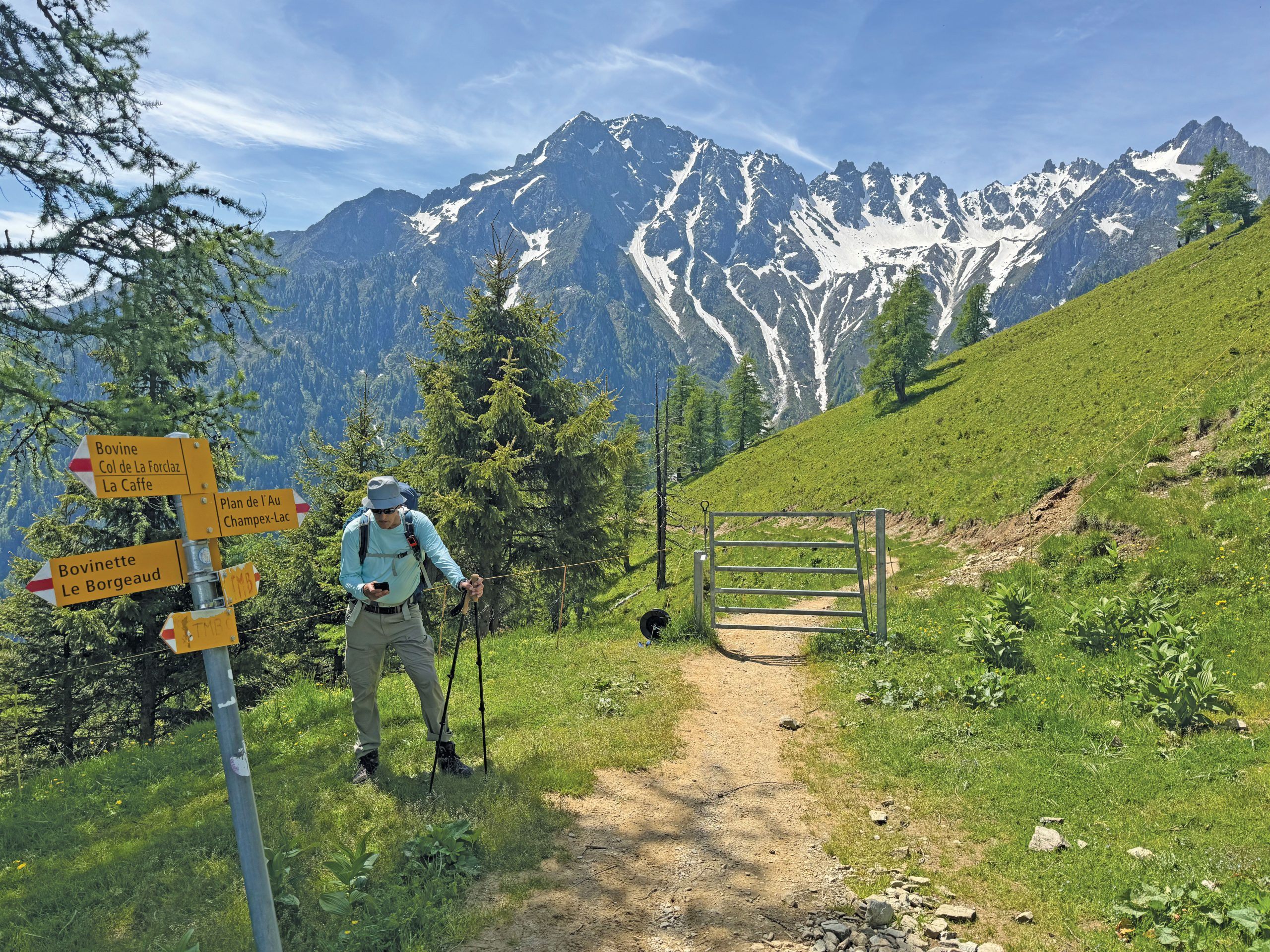
As volunteer President of the Peninsula Bruce Trail Club, I enjoy learning about new ways to make and shape the Peninsula Section of the Bruce Trail into a more sustainable and enjoyable footpath for hikers and local communities alike. In June 2024, my husband, Tim, and I completed a twelve-day hike on the Tour du Mont Blanc (TMB), a 170 km Trail that circumnavigates the Mont Blanc massif that straddles France, Italy and Switzerland. The TMB main trail reaches its highest point at the Grand Col Ferret pass at 2537 m in elevation.

At 170km, the TMB is a similar length to the Peninsula Section of the Bruce Trail but provides an accumulated 9000m of leg pumping climbs over its course. For reference, one climb of the CN tower is approximately 500m. The TMB as we know it today, incorporates ancient Celtic routes, old Roman roads, goat paths and people paths, alike. In the late 1960s, about the time that the Bruce Trail was being created, European alpine hiking experienced a boom and consequently, the current route was established. With an estimated 200,000 people hiking, running and biking the TMB annually, it is considered the most popular long-distance hike in Europe.
How does the Bruce Trail Peninsula Section stack up to Europe’s favourite hiking Trail and what could we learn from this well established route?
The TMB Climate Change Pivot
On our first day, we decided to bypass the opening 1000m, double CN tower climb by taking the Bellevue Cable Car from the official starting point in Les Houches, France. Decorating the walls of the building, were the glory days of Olympic skiing, including photos of Canadians, Nancy Green and Ken Read. Chatting with locals, we learned that the revenues brought by hikers were critical for the local economy that was suffering from progressively shorter ski seasons. This mirrored the shift we have seen on the Peninsula as well, as the Club has been able to move into more four-season programming, from just hiking to include snowshoeing and cross-country skiing.
Accommodation
The TMB has a wonderful website (https://www.montourdumontblanc.com/uk/index.aspx ) and interactive map where early planners can book their mountain refuges well in advance at a distance matching their daily goals. TMB hikers who wish to camp, must stay in designated campgrounds. The Bruce Trail is in early discussions on expanding its offerings of Overnight Rest Areas along the Trail but in the meantime, there is a list available on the BTC site that hikers started (https://brucetrail.org/explore-the-trail/#Accommodations ).
Protecting Biodiversity
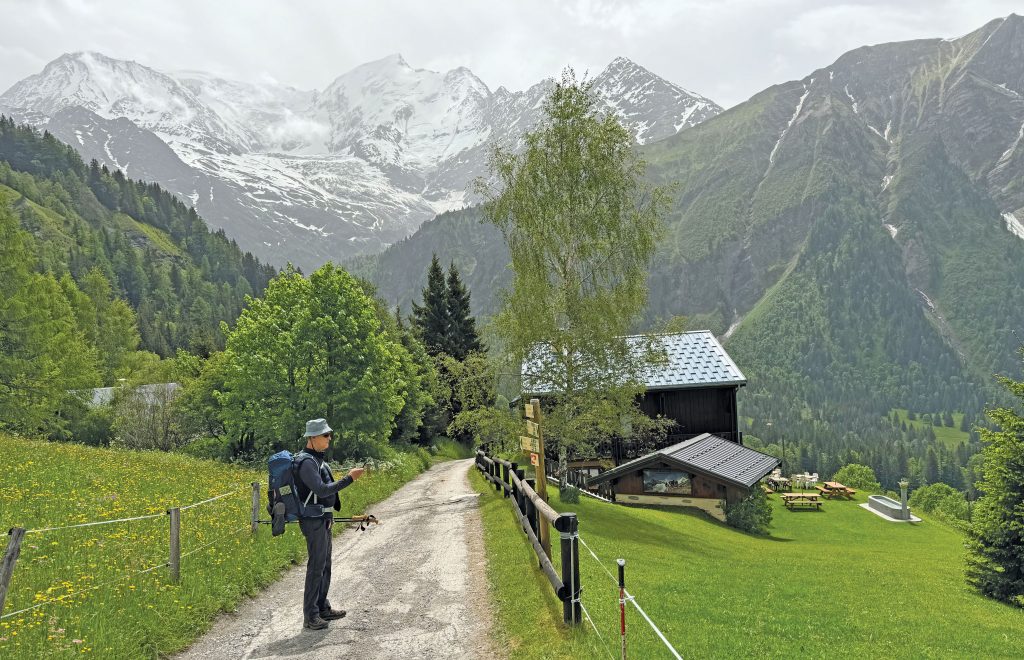
Once we were on the Trail, we quickly learned that the TMB is an alpine trail that runs through natural areas and pastureland. The Bruce Trail is a wilderness trail. The two are different. To illustrate, as budding birders, we arrived in France with the “Europe West” bird pack loaded onto our Merlin ID App. Merlin Bird ID is a fantastic app that will listen to the surrounding birdsong and list the birds in the area that are singing, chirping and squawking. We imagined all of the many new birds that we would encounter on our alpine hike. Alas, this was not to materialize and highlighted one of the big differences between the two 170km Trails. Instead, we picked up an underwhelming ten birds on our eleven-day hike! In contrast, it is not unheard of for Bruce Trail hikers to achieve their 100 birder badge (ie. identify one hundred different species of birds) on their End to Ends of the Peninsula Section, particularly during spring migration. Though many TMB hikers gushed about the beautiful bird song, (Merlin identifying two: the Common chaffinch and the Eurasian blackbird – both prolific songsters) and the abundant wildlife (the many groundhog-like marmots), hikers familiar with the biodiversity experienced on the Bruce Trail, may leave not so impressed. Make no mistake, the views on the TMB are jaw dropping and the spring wildflowers were spectacular. But there are no large animals on the TMB, like bear, and the greatest wildlife threat on the TMB are the marmots. For hikers who have done wilderness treks, the Bruce Trail has more to offer when it comes to nature.
The History of the Trails
The TMB is trying to promote its alpine trekking history in a series of nicely presented signs along the French portion of the Trail. The BTC is also on a journey of sharing its different levels of history including its partnership with Plenty Canada, identifying locations of First Nation cultural experience plus, the launch of a Founders series of Trail sections where posted stories will document the early contributors to the Trail. The Peninsula Section is developing the stories and information behind the named Side Trails to share on its website. Both Trails agree that history is important. In recent years, the Club has focussed on highlighting the significant historical contributions of Saugeen Ojibway Nation (SON): the Chippewas of Nawash and the Chippewas of Saugeen. The sharing of First Nation history and culture on the Bruce Trail is another area that makes the Peninsula Section globally unique.

Potable Water
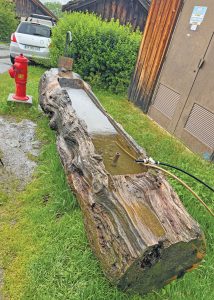
The TMB does a great job of making potable water accessible to hikers. Though initially unsure, we soon learned that water coming from spouts pouring into hollowed out logs was fine to drink. Pack weight is a key consideration when planning hikes and water gets a high priority in weight calculations. With the tough daily climbs, TMB hikers feel every one of their pack decisions and thankfully, water is commonly available in every little community, refuge and farmstead along the way. This means hikers may only need to carry one liter or so (one kilogram) of water to see them between fill ups. This is an area where we could improve for the Peninsula Bruce Trail hikers. Unlike the TMB, a hiker relying on a local water supply like Georgian Bay would in all cases along the Peninsula need a life straw or some reliable method of water purification.
Demographics
On the TMB, being in our mid-sixties, we were the old folks on the Trail. The TMB was used by young people in their 20’s and 30’s all of whom graciously accommodated our slower pace. We became accustomed to stepping aside to let the young people speed ahead of us either briskly hiking or trail running. During our tour, the trail runners posed no issues for the slower hikers even when we were down to a single file due to snow and would often even stop to chat. Though historically the Peninsula Club has not offered trail running on its hike schedule, the TMB and the trail runners we encountered, presented another very positive perspective regarding this footpath activity.
Trail Conditions
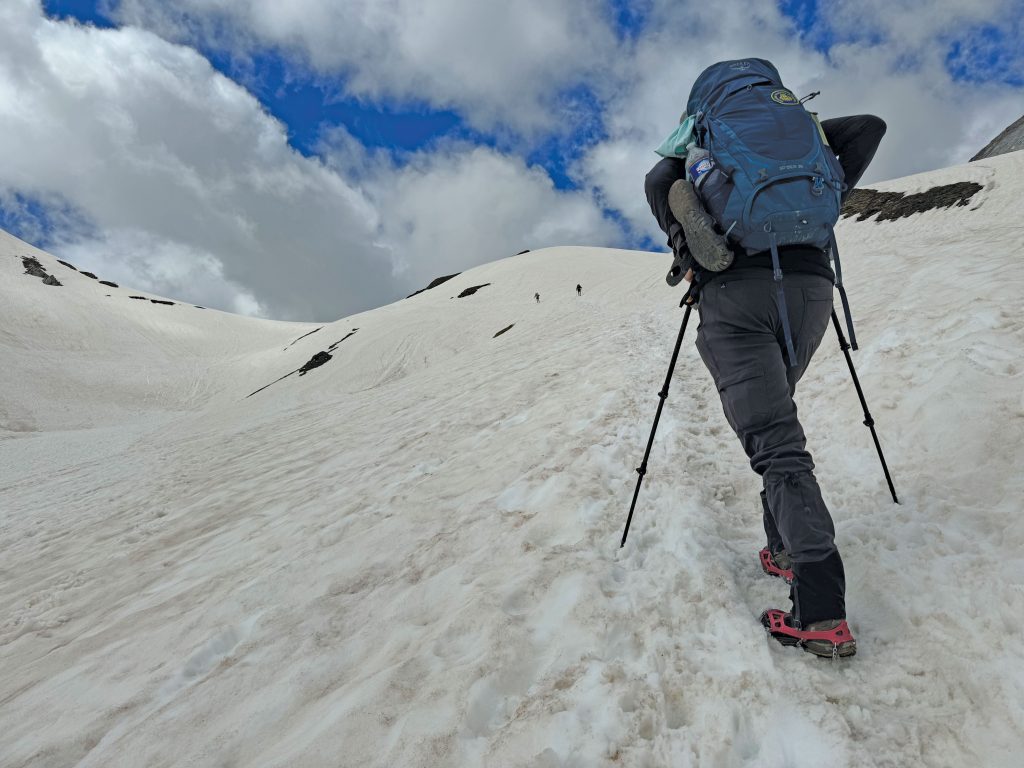
Finally, we found the TMB to be more “adventurous” than the Bruce Trail. Above 2100m elevations, Tim and I routinely found ourselves following individual icy footsteps embedded in the sharply angled slopes. In these places, progress was slow as we nestled our micro spikes into each singular footprint, ensuring three points of contact with our poles. Our caution was not unfounded. Unfortunately, deaths do happen every year on the TMB as hikers fall victim to collapsing ice bridges or falls. As rescues are a realistic consideration, before embarking on the TMB, hikers are encouraged to ensure their health insurance covers the bill for any type of rescue. Trekkers are expected to know their own limitations, research trail conditions and take responsibility for the possible results of their trek. There are expensive remote rescues that happen every year on the Peninsula Section of the Bruce Trail as well. Currently, the costs of rescues are absorbed by local Peninsula taxpayers, though Municipal by-laws allow the Fire Chief to charge all, or a portion of, the extraction and rescue costs to those being rescued.
Closing thoughts
Admittedly, 200,000 visitors hiking the 170km of the Peninsula Section of the Bruce Trail each year would be a lot. TMB numbers could jeopardize our key success factors, such as biodiversity, conservation, and critical relationships with SON (Saugeen Ojibway Nation) and local communities. We need to protect the factors that help make the Peninsula Section of the Bruce Trail globally unique.
As I scan through social media, Japanese trails are promoting hikes “anywhere but Mt Fuji” to protect biodiversity; Barcelona residents are squirting tourists with water guns in protests and Greece is closing archeological sites in extreme heat. Global conditions for tourism are changing. With the Peninsula’s exceptional biodiversity, spectacular views and temperate climate, visitors who enjoy outdoor activities will indeed be attracted here.
Collaborating on platforms such as the MNBP’s Sustainable Tourism Advisory Group and the regions’ Chambers of Commerce, the Peninsula Club will continue to do our part to share critical messaging and help control visitor traffic. With our eye on the sustainable enjoyment of trails, the Peninsula Section of the Bruce Trail aims to retain its natural advantages that make it a world class hiking destination.