



Submitted by Jacob Kloeze,
Nature Conservancy of Canada
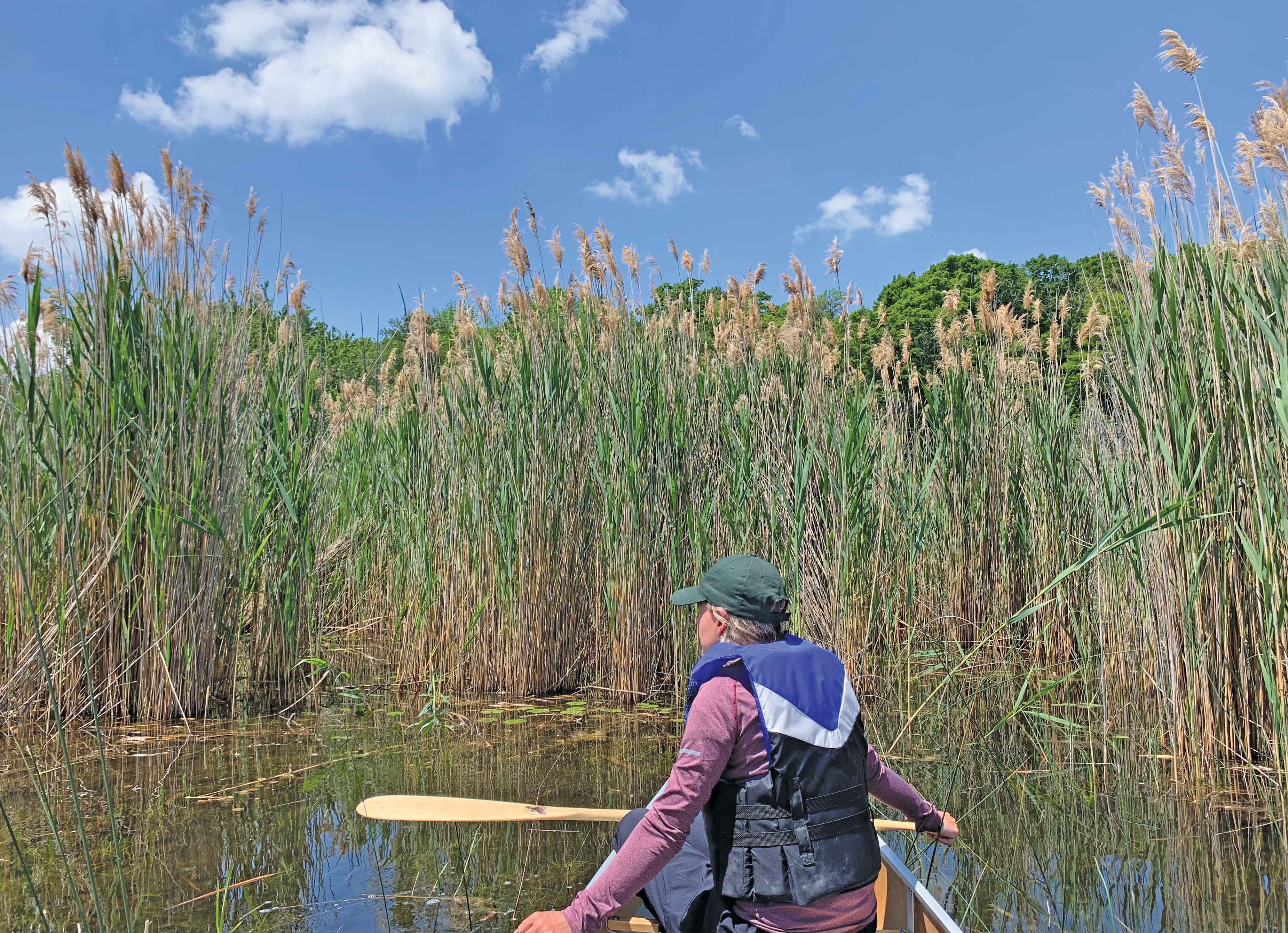
If you have driven across southern Ontario, chances are you have come across invasive Phragmites, one of the worst invasive species to be introduced in Canada. This perennial grass grows and spreads at alarming rates, reaching heights of over five metres. Patches become so dense, they block sightlines where it establishes in one of its favourite environments — wet ditches and road allowances — causing damage to infrastructure and clogging drainage systems.
On the Saugeen Peninsula, invasive Phragmites has spread throughout the peninsula’s roadsides, wetlands and shorelines. It not only blocks access to water and increases flood and fire risks but also crowds out native plants and damages vital habitat for wildlife like at-risk turtles and snakes, migratory birds, and fish that rely on these areas for spawning.

Phragmites’ seedheads contain more than 2,000 tiny seeds, and it only takes a few seeds hitchhiking on an ATV rider, hiker or a gust of wind to spread. Even without its seeds, invasive Phragmites can grow from a single root or stem, and established patches can spread at a rate of up to 30 per cent each year. So, how do you control a plant that spreads and grows so quickly across property boundaries? Collaboration is the key.
Since 2020, the Nature Conservancy of Canada (NCC) has worked with a number of organizations to control invasive Phragmites across the Saugeen Peninsula. This includes supporting efforts led by community volunteers to control invasive Phragmites, which once overwhelmed the coastal wetlands of Oliphant and the Fishing Islands. Today, thanks to the Oliphant Fishing Islands Phragmites Community Group, supported by NCC and other organizations, invasive Phragmites levels in Oliphant have been reduced by more than 95 per cent from pre-control levels, and aquatic life has returned.
But there is more work to be done. In 2025, NCC continued its successful work to combat invasive Phragmites. With partner support, more than 20 hectares of invasive Phragmites control took place in many inland wetlands, lakes and on Lake Huron shoreline across the entire Saugeen Peninsula. This work has included expanding on efforts that have been in place at Oliphant for many years, including increased survey efforts of nearby lands, completing landowner outreach for permissions to survey land and manage invasive Phragmites and, finally, controlling any stands when they were found.
In areas where invasive Phragmites has been greatly reduced, native plants are beginning to show themselves again, and wildlife is returning to the habitats they need to survive.
This project was made possible thanks to the support of EcoAction, and the community partnerships that helped NCC with the work on the ground. As Canada’s leading non-profit conservation organization, NCC partners with public, private and community interests to support resilient landscapes at scale for people and nature to thrive.
As invasive Phragmites continues to cross boundaries, so does NCC through its many collaborations, both within the Saugeen Peninsula and across the province through the Ontario Phragmites Action program. If the work does not continue and expand, invasive Phragmites instead will continue to spread throughout these areas, impacting sensitive habitats and the infrastructures that we depend on for our livelihoods and well-being. NCC continues to offer free invasive Phragmites control services on Peninsula private lands and will keep working with partners to cover as much ground as possible as the 2026 field season begins. Together, we will ensure that these ecosystems can support us and the future generations to come. To learn more, visit natureconservancy.ca/stewardship-on.
This project was undertaken with the financial support of the Government of Canada provided through the federal Canada Water Agency.