



Returning Lion’s Head’s Main Street To Native Tree Species
Submitted by John Hill
Growing up in Lion’s Head, the limestone cliff, lighthouse, and the ever-changing moods of Georgian Bay were the landscapes of everyday life. The scenic trio features prominently in my childhood memories of daily walks to the lighthouse, swimming lessons in the harbour, family hikes to the lookout and big adventures along the shore.

I had a few other memory forming destinations too. A walk wasn’t complete unless I had been under the arching branches of a big, grey century-old Sugar Maple. Everatt Street by the Henderson’s old house and Mr. Swanton’s garden was my favourite, especially around Halloween. Walking through the fallen orange, red and yellow leaves was an annual event not to be missed.
We are fortunate that healthy and strong Sugar Maples grow in the village. Giants like these are rarer on the streets of cities further south, where salt, pollution, and compacted soil have taken their toll. In many urban forests they are also being crowded out by the Norway Maple.
After the demise of the American Elm by Dutch Elm Disease in the mid-20th century, Norway Maples were used as a fast-growing replacement street tree. Unfortunately, their adaptability and tolerance for the stress of urban life made them an excellent invader of parks, woodlots and ravines across Southern Ontario and the eastern United States. Their dense canopies and shallow thirsty roots inhibit the regeneration of Sugar Maples, as well as Eastern White Pine, Eastern Hemlock, oaks, and hickories. Almost all herbaceous understory species struggle to survive in the deep dry shade as well, leaving the ground open for invasive weeds.
Norway Maples are certainly disease resistant, but that’s easy when native bugs and birds find them useless. The forests where they’ve taken over grow quieter and less interesting every year. In the Rosedale Park Drive ravine of Toronto, Norway Maples made up 10 per cent of the canopy tree species in 1977. Four decades later, the European species comprised a full 40 per cent of the canopy – 50 per cent in some locations. And without human intervention, it is estimated that 60 per cent of the forest cover in the ravine will be Norway Maple by 2050 (Toronto Ravine Revitalization Study).
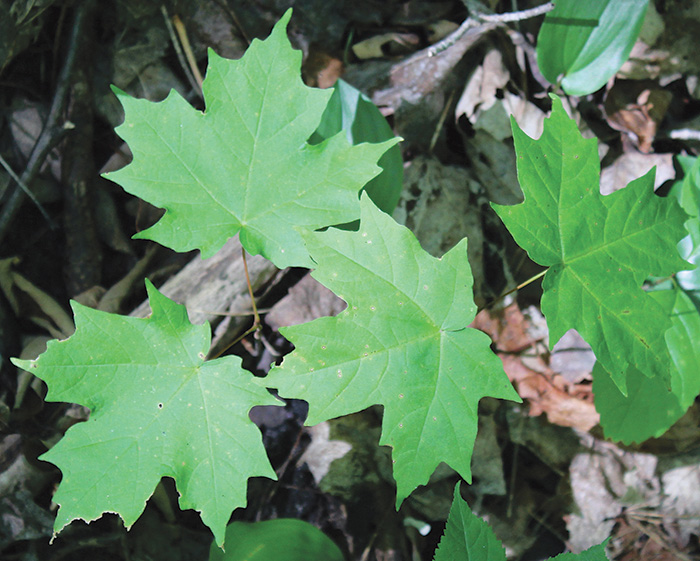
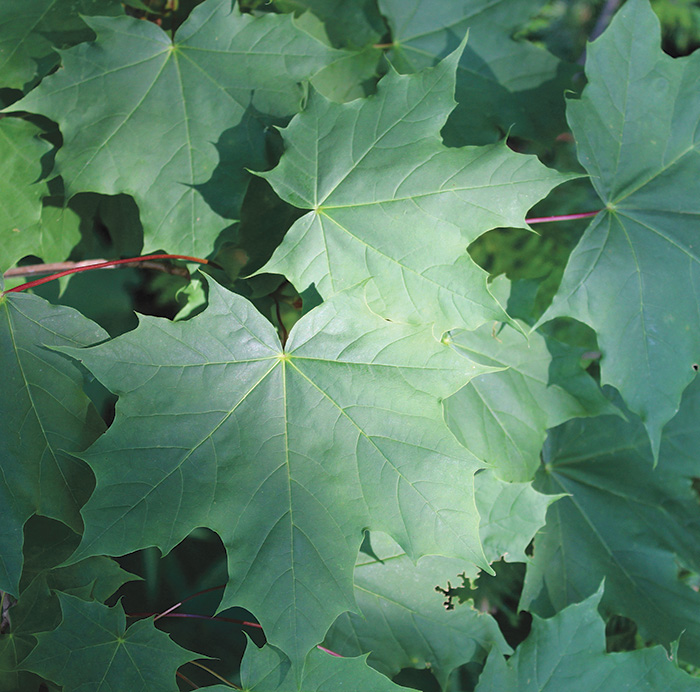
Imagine my surprise when I found one growing along the shore beneath the Lion’s Head bluff. (You can distinguish them by their five to seven lobes vs. Sugar Maple’s five lobes. The side lobes of Norway Maples usually extend as wide or wider than the front three lobes, and they exude a milky sap if cut.) The small tree was a pioneer invader, no doubt washed in during an offshore breeze from Lion’s Head. The village where Sugar Maples grew was gradually replacing its canopy with Norway Maples. Several were even planted along the shoreline by the Memorial Garden and now I was witness to their impact creeping into Lion’s Head Provincial Park.
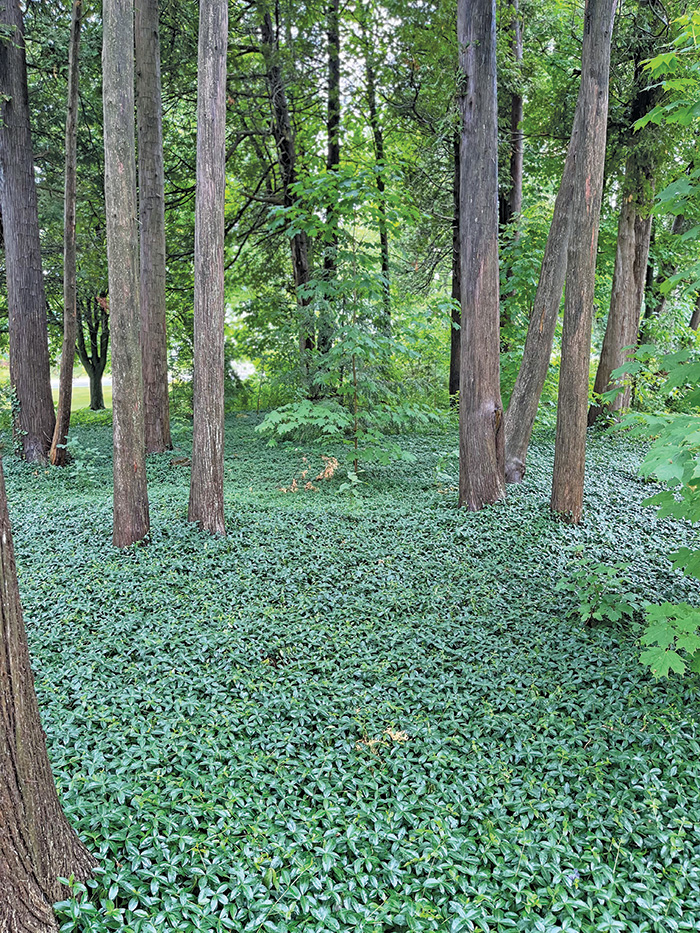
Perhaps no property in town was impacted more by this invader than my parents’ Lionheart BnB property on Main Street. While it still has two huge American Elms and a stately Sugar Maple, until recently, the woodlot portion of the property was dominated by Norway Maples, most likely spreading from trees unwittingly planted along the driveway 50 years ago. Approximately 60 percent of the canopy in the affected area was Norway Maple, with the original White Cedars holding on in the gaps. The only plants living beneath them were smaller Norway Maples, periwinkle and goutweed, still sold remarkably by some nurseries as a “ground cover” (read invasive and native plant smothering).
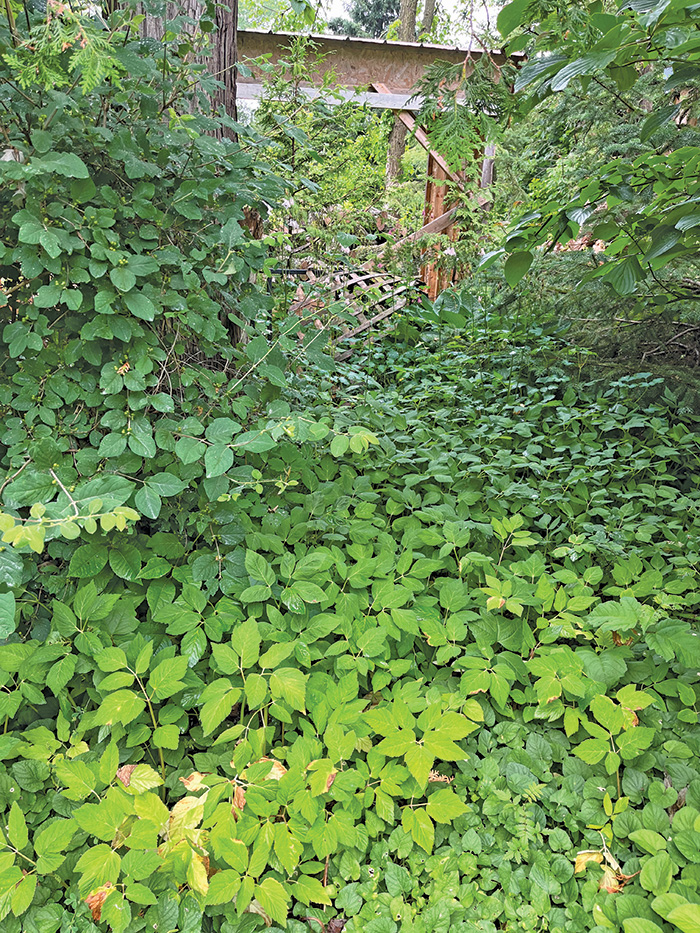
In 2020, with more time to spend thinking about and enjoying our natural heritage, I made a proposal to my parents: What if we removed the Norway Maples invading the heart of Lion’s Head? Perhaps in the long run we would help protect the park and maybe even support a wider variety of birds and insects.
We started the project during the winter of 2021 by removing roughly 80 Norway Maples of various sizes. We then smothered the periwinkle and goutweed with a layer of wood chips and topsoil.
In place of these invasive species, we planted five types of oaks native to Ontario, hickories, and of course, Sugar Maples. We also created terraces and planted a meadow for pollinators. It was a joy to see guests sitting amongst the birds, bugs and blooms last summer knowing the spot was nearly a desert for wildlife (and of no interest to people) only four months earlier.
The next stage in the revitalization process will take time and patience. As the new trees grow and need more light, the last remaining Norway Maples will come down. Until then, pulling their offspring and other invasive weeds will give the new trees a chance and hopefully prevent Norway Maples from colonizing even more of Lion’s Head.
Like most Canadian gardens, the trees, shrubs, and plants around Lionheart are a mix of native and ornamental species. New varieties of plants are now selected for their wildlife benefits and food production, as well as beauty – and deselected if invasive. I think this approach is fitting for a village on the Bruce Trail surrounded by world renowned biodiversity.
I hope that as the Norway Maples come down at Lionheart and new diverse species mature along Main Street, others will be encouraged to gradually remove their Norway Maples and replace them with one of our many beautiful native trees. Maybe even a young Sugar Maple will be planted by someone. Doing so, it will no doubt shade a young walker someday and blanket the autumn streets with shades of gold, orange, and red.