




By John Francis,
Bruce Peninsula Press
A Toronto Star story in the 1980s described the hamlet of Dyers Bay as “moribund”: it was a couple of hundred cottages, half of them unoccupied on any given day.
Ah, those were the days.

It’s not that the village itself has changed much since then; it’s just the traffic through the village that changed.
The “discovery” of Cabot Head and its lightstation created exponentially increased traffic through Dyers Bay. Where there used to be a few dozen cars per day, the traffic grew to hundreds of vehicles per day, all of them hurrying through the hamlet at inconsiderate speeds, rushing to get to Cabot Head.
It got so it wasn’t safe to walk or cycle through the village and Dyers Bay is a place where walks along the road were a daily pleasure for most community members. The road was the social hub of the village.
Then the Department of Fisheries and Oceans closed the lightstation for building repairs and environmental remediation — to remove the lead and mercury pollution that are around every historic lighthouse. This process was managed with such incompetence that four years later, the buildings are in much worse shape than they were to begin with and the volunteer organization that had maintained the lightstation for decades is suffering financial stress from four years without cash flow.
But closing the lightstation was not a disaster for the village of Dyers Bay. It meant nobody needed to go out Cabot Head Road so there was no traffic through their village. People could actually venture out of their cottages onto the road and walk around, even on a Saturday. They got to know their neighbours again. When Cabot Head Road washed out in the winter of 2019-2020, many in the Dyers Bay community breathed a sigh of relief.
A large majority of the Dyers Bay community don’t want that road to open again.
Ever.
The road trespasses on private land. Those landowners were also unhappy with the high traffic volumes.
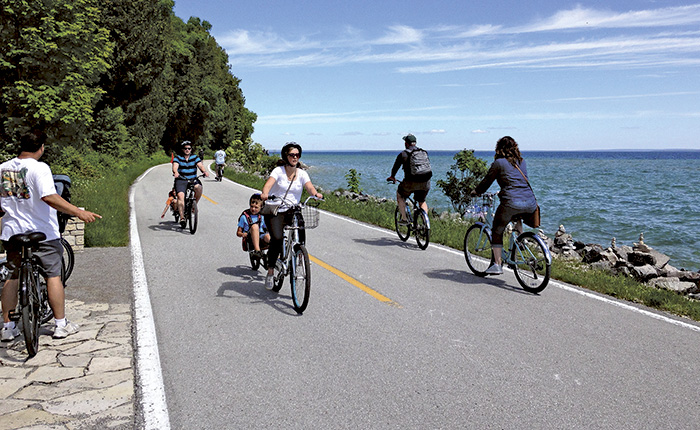
The repair bill — a quarter million or so — was also an issue. So a fully funded conversion to a hiking/cycling trail ticks a lot of boxes.
But would anybody use a wilderness cycling trail?
I sure would. Most of my friends would, too. Given the popularity of Mackinac Island, Michigan, I don’t think it’s just us, either.