




Submitted by Jacqui Wakefield
on behalf of the MNBP Waste Management and Diversion Committee
Did You Know?
The decomposition of food and other organic waste in our landfills produces methane. This greenhouse gas is over 20 times more potent than carbon dioxide and very harmful to the environment!

Why Compost?
First, backyard composting is an excellent way to reduce our garbage! Food wastes are estimated to contribute about one-third of all the garbage going to landfill sites. If we can reduce our trash by that amount, we save landfill capacity and taxpayer dollars, AND we reduce the release of climate change gases – especially of methane.
Second, the compost we produce provides a supply of free fertilizer/nutrients and humus for garden soil. Compost works for decades by promoting plant growth, and experts say that by increasing composted organic matter in tilled agricultural soils by 1-2%, we could return our atmosphere to the pre-1850 level. Pretty important climate change strategy!
So, we have two compelling reasons for composting at home!
But…. despite the benefits, many residents are hesitant because of the fear of attracting bears or other critters. The good news is that the key to safe composting can be summed up in two words: odour free. If your compost smells, it will attract bears, other critters and birds!

So, HOW do we do it?
Experienced gardeners have made many helpful suggestions in previous editions of this paper – (1) build or buy a compost bin (many options available, including black composters from the Municipality) with a proper base, (2) layer the compost ingredients with a variety of materials, and (3) stir/turn frequently.
What can I compost?
• Leaves, grass clippings, plant material
• Vegetable trimmings, fruit peels and scraps
• Egg shells
• Tea bags, coffee grounds and paper filters
• Shredded paper and newsprint
• Hair and dryer lint
What should I NOT compost?
• Meat, fish, bones
• Fats and oils
• Dairy products, including cheese
• Pasta, rice and cereal
*These items can attract hungry critters!
The Perfect Compost Recipe: Equal Parts Greens & Browns
Greens: The bacteria that do the major work in your compost bin require nitrogen-rich “greens” (eg, kitchen vegetable scraps, plant material).
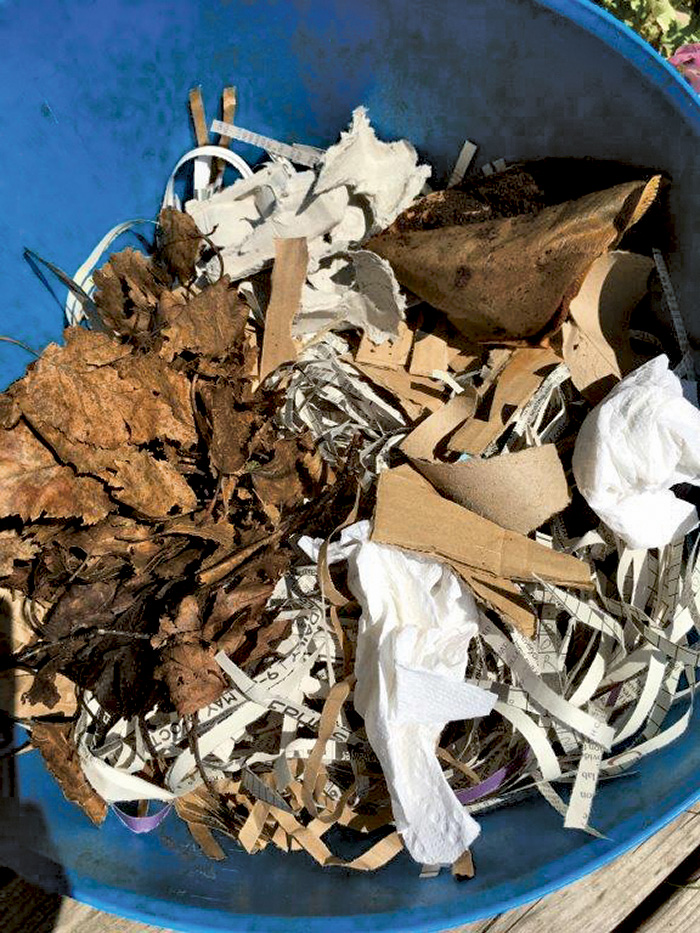
Browns: Go big on “browns” that are rich in carbon and vital to creating healthy, odourless compost. Browns include fallen leaves, straw, newspaper (shredded or torn into narrow strips), non-greasy paper towels or napkins, cardboard (toilet paper rolls, egg cartons, corrugated cardboard torn into small pieces), and paper coffee filters.
Specific tips:
· For easy kitchen clean-up, line your compost bucket with a paper bag, paper towel or newspaper…. everything can be emptied into your outdoor composter.
· Cut up kitchen scraps and plant material, so the items will break down more quickly.
· Put the “browns” on top of each layer of vegetable-fruit-plant materials. If you can get them, fallen dry leaves are excellent! From time-to-time, add some soil to introduce bio-organisms that contribute to a faster composting process.
· Stir or turn the layers periodically to be sure oxygen gets to the agents that do the decomposing work — beneficial bacteria, protozoa, fungi, and worms. They will survive only with adequate air. Not enough air, and/or too much moisture, results in compaction rather than decomposing – with bad smells!
· Avoid overloading the compost with fruit peels and scraps.
· If your compost is covered, it can absorb a lot of moisture, so add water periodically when it is getting dry.
Note: If you use the compost only for flowers and shrubs, you can add small amounts of pet waste. However, most experts recommend NOT doing this if the compost is used for vegetables, as the compost needs to get very hot to kill any potentially harmful germs or parasites in the poop.
Anything else?
Ensure that you have nothing else on your property that might attract a bear. It may not be the compost that encourages a bear to visit. A bird feeder, an unlocked garbage tote or outdoor pet food could be the invitation for a bear — and your compost might be an innocent victim in the bear’s search for other food.
Bottom Line?
Keeping compostable food and plant waste out of our landfills is a high priority – for many good reasons. Let’s take waste reduction to the next level, and benefit our environment at the same time!