

A Temporary Arrangement to Provide Cats with Safe Warm Homes This Winter
Tammy Raycraft,
Bruce Peninsula Press
A growing number of stray and feral cats across the Bruce Peninsula prompted local rescue initiative, Venus Community Cats, to focus on more than finding homes for kittens.

The Venus project began in March 2025, when local resident Karen Livick received a call from someone asking her to assess a family situation involving a large cat colony. The family had initially taken in a mother cat and her kitten, but without spaying or neutering, the population grew.
By the time Livick was contacted, the colony had reached 65 cats.
Livick spent much of the following year arranging to have the adult cats spayed and neutered, before returning them to the original family to be cared for. The kittens were brought into Livick’s care at her home in Lion’s Head, eventually prompting her to turn her garage into a temporary rescue space.
With help from community donations, and volunteers who helped to socialize the animals, 49 kittens found new homes.
What began as an effort to help one family eventually developed into a broader community initiative.
The Venus project has since expanded its outreach through a website, Facebook and TikTok, helping connect with residents across the Peninsula.
A Focus On Prevention
Brianne Farquhar reached out to Livick toward the end of 2025 after learning about her efforts, offering to help with the project. The two quickly discovered they shared the same goal: addressing the problem before it becomes another overwhelming situation.
“What we wanted to do was not just rescue cats, but to focus on prevention,” said Farquhar. “If you don’t deal with the situation right from the get-go, from the beginning, it grows,” Livick said.
Farquhar said even a single cat can quickly lead to a much larger problem when people are unable to access affordable veterinary services.
She recalled working with a man who began feeding one female feral cat. Despite attempting to contact rescue organizations for assistance, he was unable to get help. Within two years, the colony had grown from one cat to 18, including 14 kittens.
The experience highlights what the organization says is a significant challenge across the Bruce Peninsula: limited access to affordable spay and neuter services, particularly for people living in remote communities.
Residents may have to travel considerable distances to access veterinary care. Farquhar said she has made trips from Sauble Beach to Collingwood for community cat spay and neuter appointments, a journey that can take an entire day.
The area also faces challenges associated with seasonal tourism and a large population of barn cats.
The women said cats are sometimes brought to the Peninsula by visitors and become lost, while other cats become dependent on seasonal residents who feed them during the summer before leaving for the winter. Without consistent caregivers, those animals can be left struggling to find food and shelter.
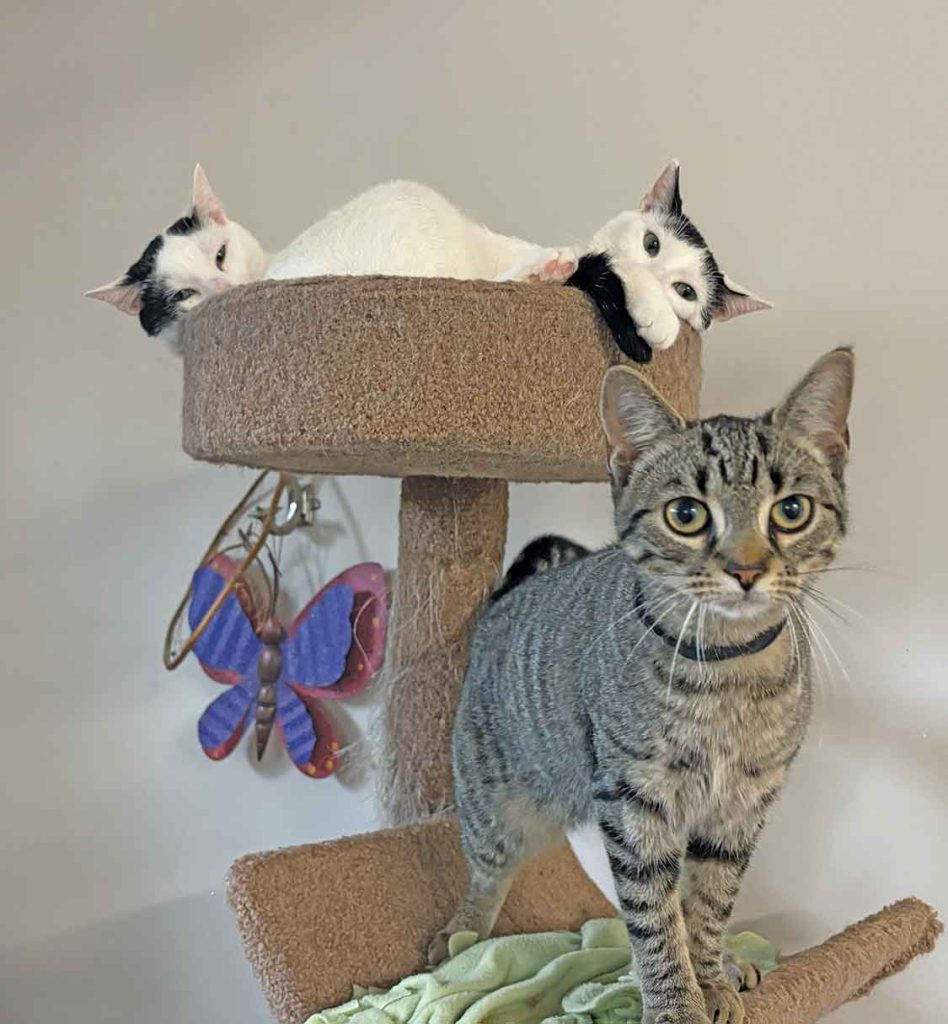
Photo: Venus Community Cats provides shelter, food, beds and many toys for the cats waiting to be adopted. The current need is for winter foster homes for cats. 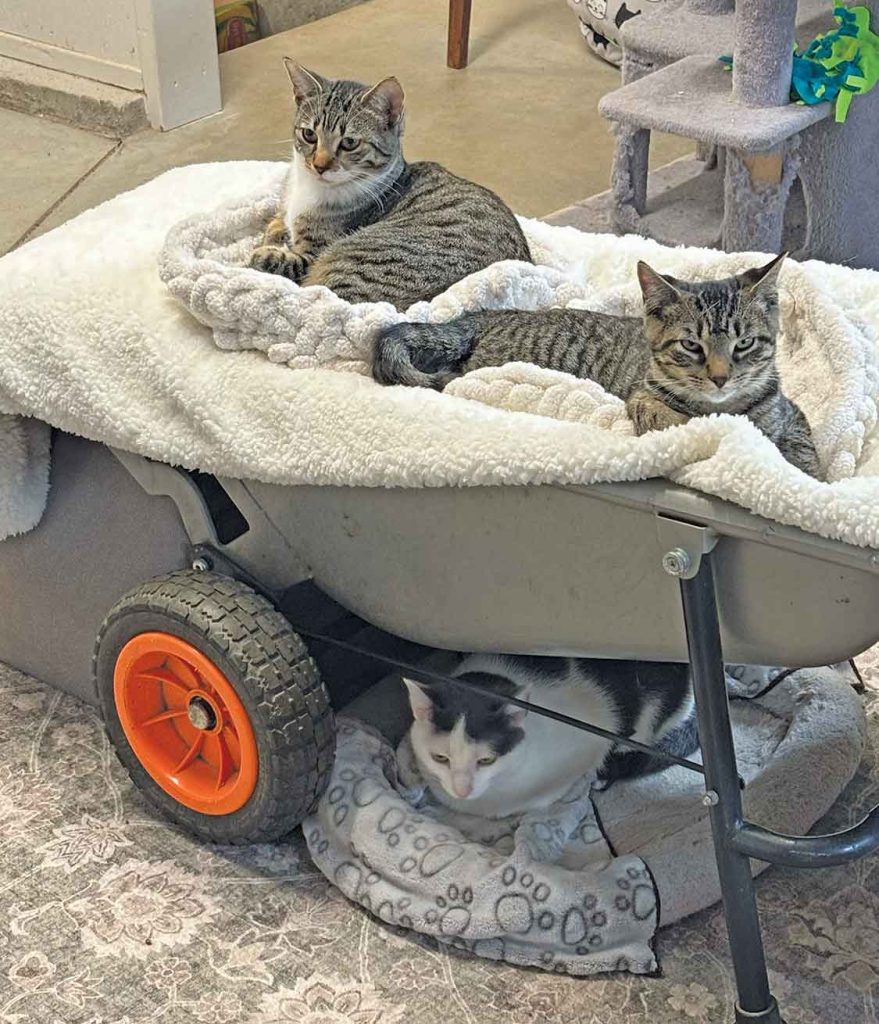
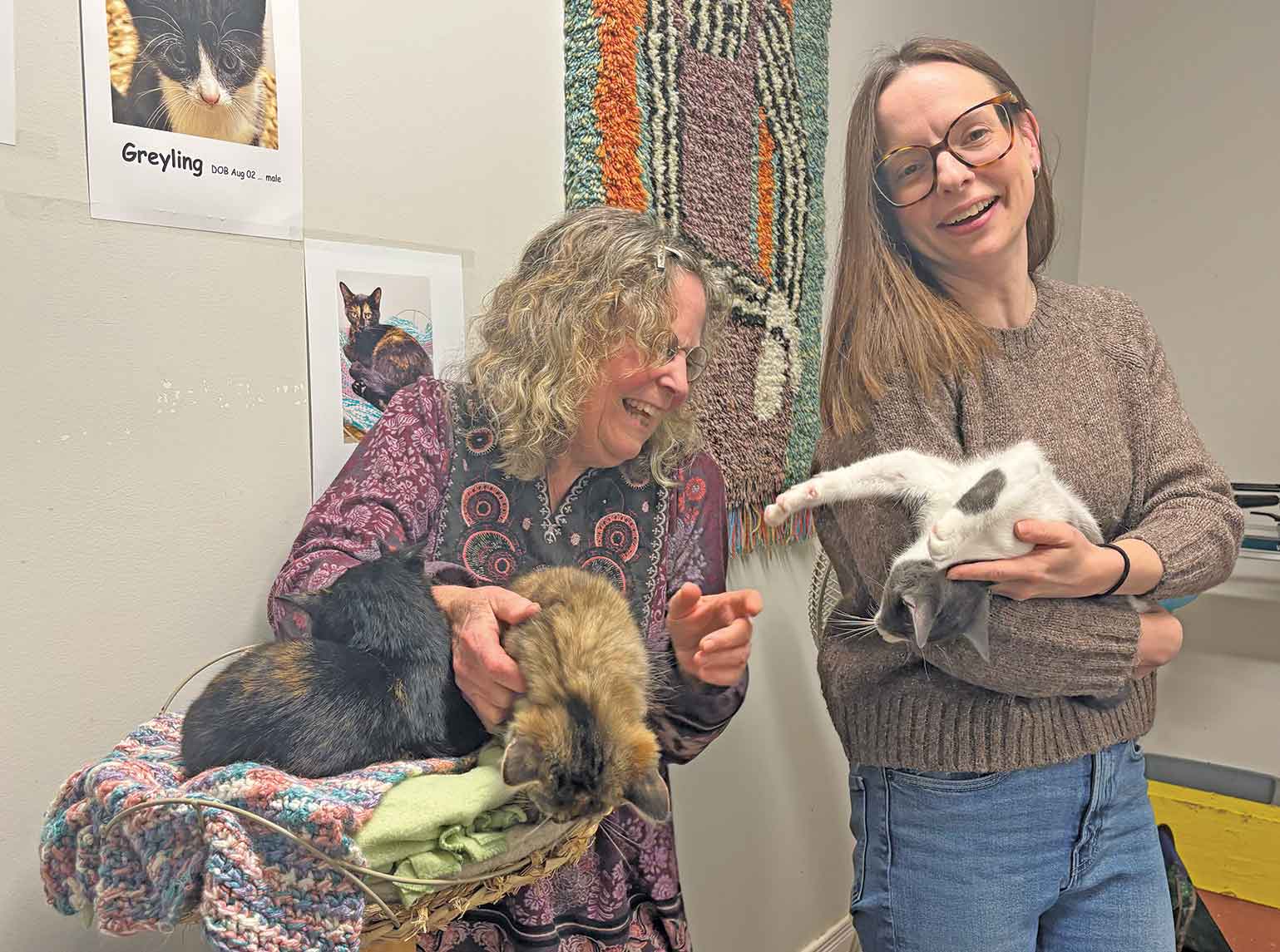
Photo: Venus Community Cats welcomes volunteers to play with and snuggle cats to help with socialization. These cats are housed separately from the young kittens.
Trap, Neuter, Vaccinate, Return (TNVR)
A major part of the project’s work is trap-neuter-vaccinate-return, commonly referred to as TNVR.
The process involves humanely trapping cats, arranging spaying or neutering and rabies vaccinations, providing post-operative care and returning them to their original location when a reliable caregiver is available.
The project also works with caregivers to teach them how to trap cats and provide ongoing support. Farquhar said the goal is not simply to remove cats from their environments, but to control reproduction while ensuring animals have someone looking after their basic needs.
Venus Community Cats is working to support people who care for outdoor colonies, including providing straw for feral cat shelters during the colder months.
Immediate Need For Temporary Winter Foster Homes
Venus Community Cats has helped over 120 cats through spaying and neutering. They have worked with at least 10 colonies this year, stretching from Sauble Beach to Tobermory.
Despite the progress, the work is ongoing, and the organization is now facing an immediate need for temporary winter foster homes.
Livick said there are currently 27 cats in their care, although she hopes adoptions will reduce that number to around 20. She described the fostering arrangement as a temporary commitment that would give cats an opportunity to experience life in a home and continue developing their social skills.
“It’s a good kind of fostering because it has a beginning, and it has an end,” she said.
Adoptions are also a priority, particularly for kittens and cats that have been socialized and are ready for family life.
Despite the organization’s name and its focus on feral cat populations, Farquhar stressed that the animals currently available for adoption are not feral. Many were born in the organization’s care or have been handled and socialized from a young age, making them suitable candidates for household pets.
Beyond fostering and adopting, residents can help by donating wet and dry cat food, contributing financially toward veterinary expenses, volunteering to socialize animals, transporting cats to appointments or simply sharing adoption posts on social media.
Farquhar estimated the medical cost of TNVR at approximately $200 per cat, which covers procedures, vaccinations, anaesthesia and pain management. That figure does not include the additional costs of transportation, food or caring for cats brought into the organization’s care. The veterinarians have generously volunteered their time to this endeavour.
Livick said even small contributions can make a difference, recalling a young girl who once donated 25 cents of her own money to the project. “The smallest amount says the biggest thing often,” she said.
Ultimately, Livick and Farquhar hope their work will encourage people to reach out for advice, particularly before beginning to feed an outdoor cat, as establishing a feeding routine can create an ongoing responsibility.
For Venus Community Cats, the goal is to build a network of informed residents who can help address the problem in their own communities.
“We can’t help everybody,” Livick said. “But we can help the ones that are in front of us. And we can help you help them.”
More information about adoption, fostering, volunteering, and ways to support the organization can be found on their Facebook page – Venus Community Cats and on their website https://venuscats.ca
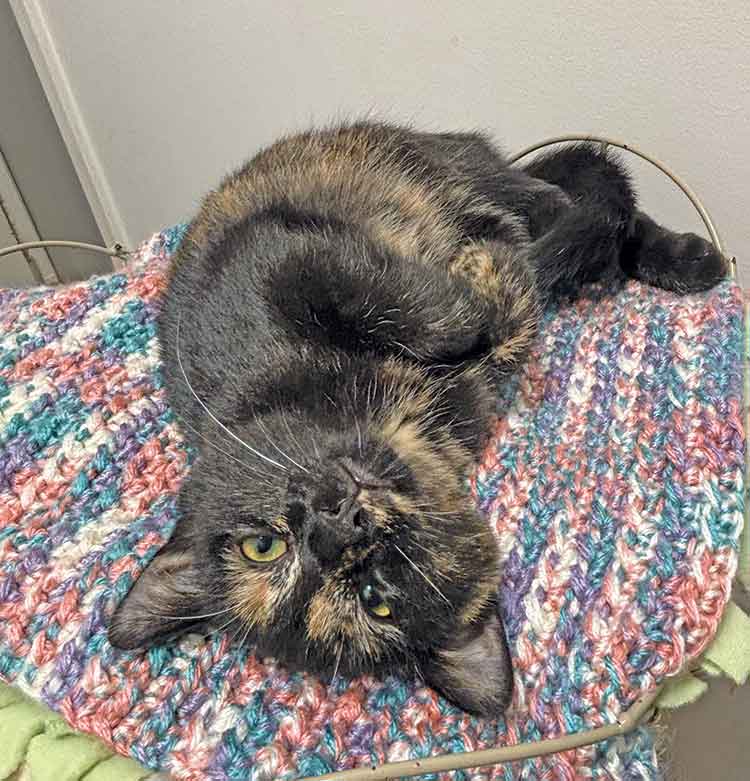
Photo: Leroy, the tortoiseshell kitten, was named before discovering she was female. Her calm demeanour matches the photo. She is currently housed with a group of kittens. 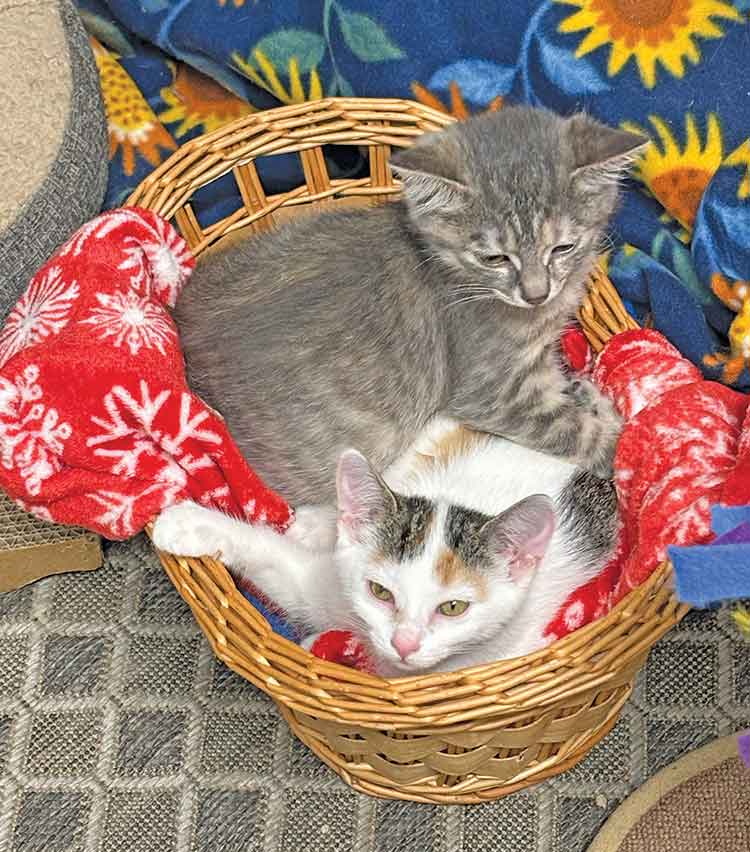
Photo: These adorable kittens were snuggled up together.