
By John Francis, Bruce Peninsula Press
If you were watching TV in the 1950s and early 1960s, you will remember commercials extolling medicines that would combat “ragweed and goldenrod”.
This was in the days before the internet — now that I think of it, it was also the days before colour TV — and those commercials have been buried by the sands of time. Even Google doesn’t remember them.

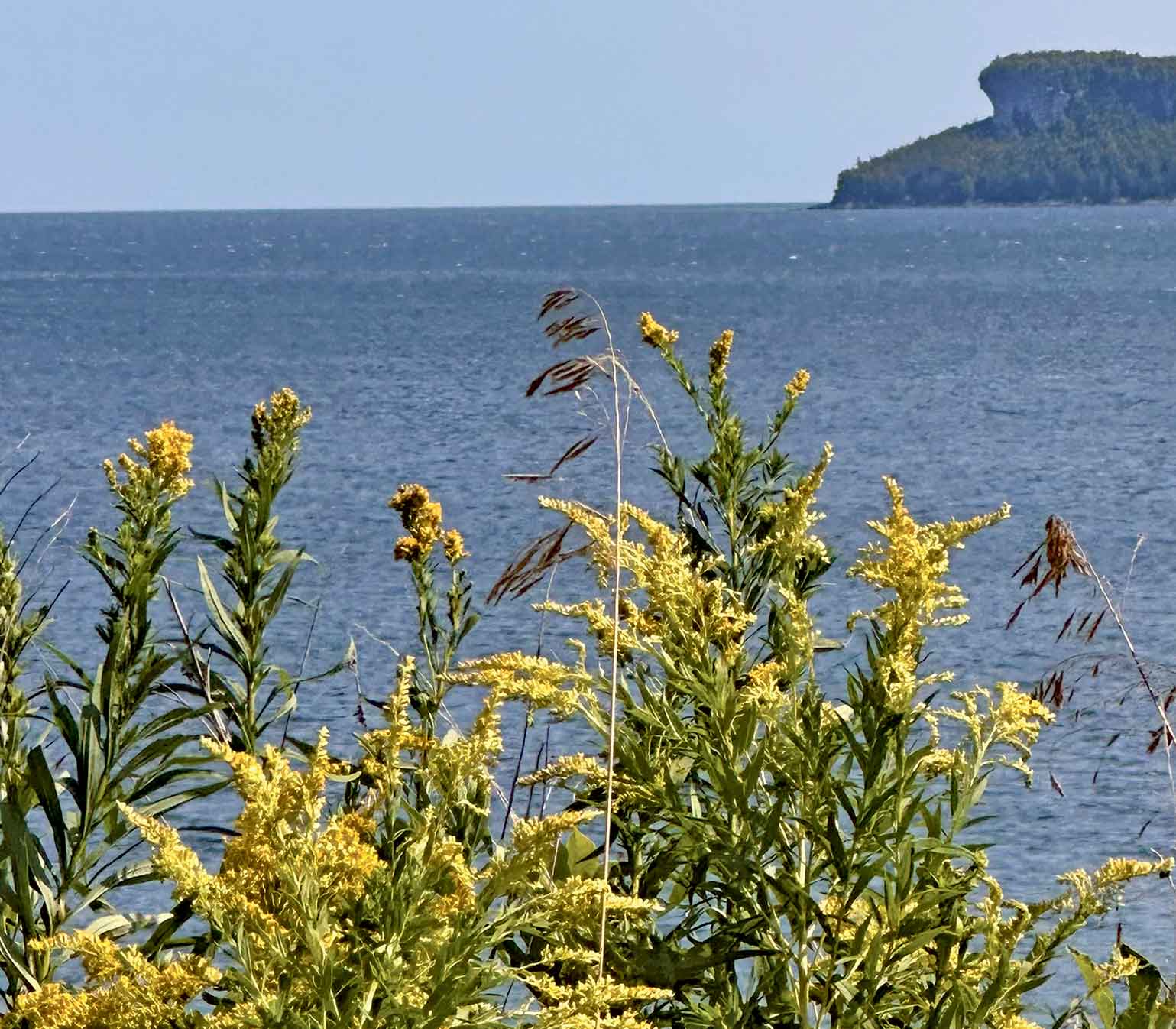
But the phrase “ragweed and goldenrod” remains burned into our cultural lexicon, defining the twin culprits of our late summer pollen allergies. This is grossly unfair to our harmless, interesting and rather pretty goldenrods. They just got dragged along in the race to vilify ragweed (which does indeed produce huge amounts of very irritating pollen). But the goldenrods? Not guilty on all charges.
Alvars occur on limestone (AKA dolostone) plains, wherever drought or flooding (or both) prevent a buildup of deep soil. There is a lot of alvar habitat along the Lake Huron shore of our peninsula. Alvar habitats tend to have sparse, stunted or absent tree cover and an oddball flora (fancy word for plant community) consisting of species that can tolerate the flooding and/or drought.
Goldenrods are a large part of the late summer flora of our Lake Huron shoreline alvars.
Canada Goldenrod, with its multiple wands of yellow flowers, is ubiquitous on both shores of our peninsula and everywhere in between.
But the alvars also host many of the 17 other goldenrod species that can be found in Grey-Bruce. There’s the provincially rare but locally common Ontario Goldenrod, the flat-topped Ohio Goldenrod, Bog Goldenroad, the delicate Hairy Goldenrod and several others. Using the Seek app and the Owen Sound Field Naturalists’ Guide to Asters, Goldenrods, Fleabanes, you can quickly learn to tell the common ones apart. Then you’ll start to notice the uncommon and rare ones.
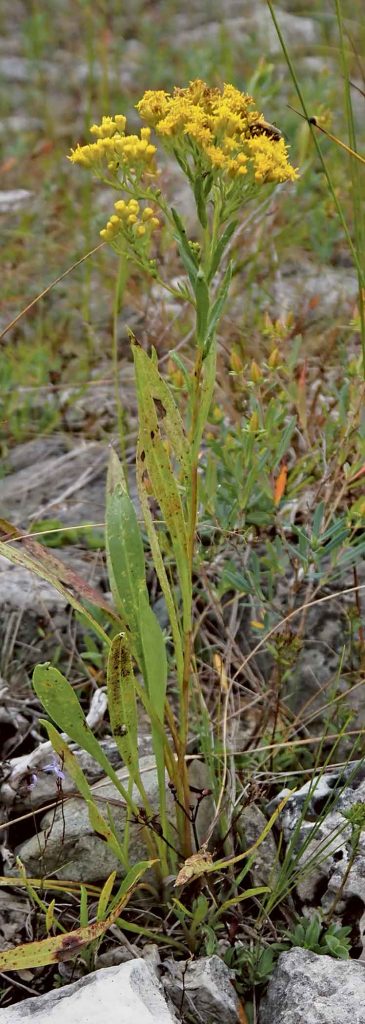
Photo: Ohio Goldenrod is common along the Lake Huron shore.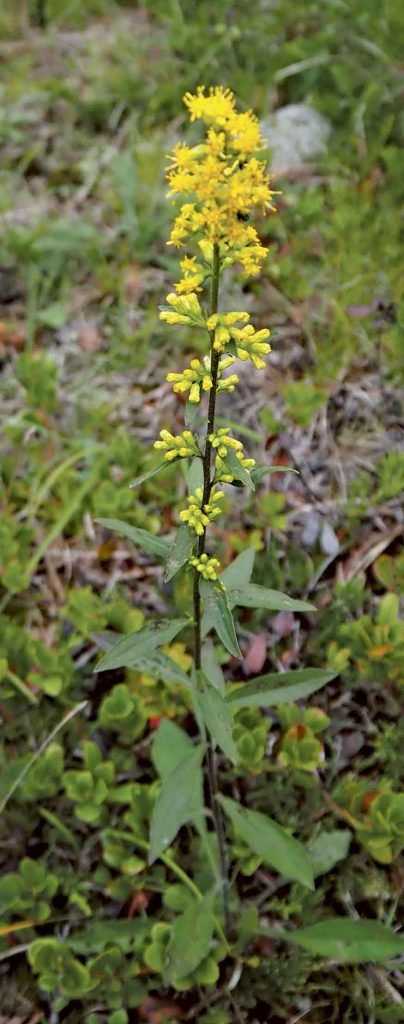
Hairy Goldenrod is a common component in the shoreline alvar plant community.
But it’s not just goldenrods.
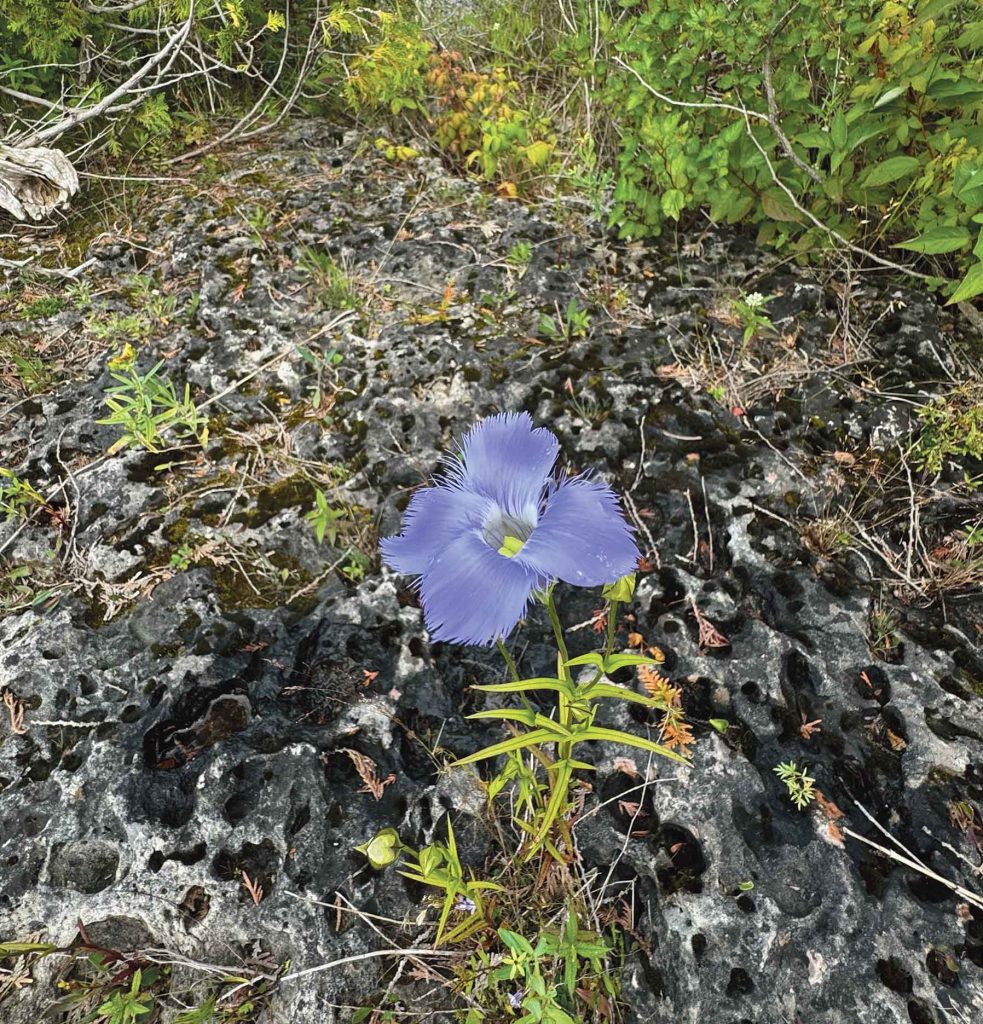
Our shoreline alvars offer special flowering treats continuously from May to October. In spring, it’s the Dwarf Lake Iris that naturalists drive here to see. In August and September it’s the Fringed Gentians with their intense colour and impossibly delicate fringes. Purists also look for the Spiral Ladies’-tresses, a tiny orchid with dozens of tiny, perfect orchid flowers, each the size of a grain of rice.
If you’ve a mind to enjoy a common flower just because it’s exquisite, there’s the Small-flowered Purple False Foxglove. (There are tens of thousands of species of plants and some of the names get a bit over the top.) But this one is an intense mauve.
Shoreline alvars are being preserved in a number of places on the Peninsula. There’s the Nature Conservancy of Canada property on China Cove near Tobermory. Multiple agencies have properties at Alvar Bay near Cape Hurd. There’s the National Park shoreline at Singing Sands (the best part of which was preserved by the Federation of Ontario Naturalists for several decades before the National Park was created). There’s the National Park shoreline south of Johnston Harbour (not easily accessible). There’s Black Creek Provincial Park. Further south, there’s the St Jean Point Nature Reserve near Howdenvale.
Come for the gentians. Stay for the goldenrods.