




By John Francis
As often happens to politicians, our municipal councillors are being given contradictory instructions by different groups of MNBP citizens.
Loud instructions.

As Mayor Milt McIver often reminds us, a lot of voters tell him that “tourism should pay for tourism”.
With commercial tourism properties constituting less than 2% of the municipality’s tax base, there’s no way to cover those expenses out of the tourism sector’s municipal taxes.
So other strategies are needed.
Paid parking was MNBP’s first foray into trying to get tourism to pay for tourism. It has been quite successful but it barely scratches the surface of what all those visitors actually cost us.
Tourism costs us somewhere over a million dollars a year, although you have to squint to see it.
Take Bylaw Enforcement, for example. It has an operations budget of $632,000 for 2024 (not including capital items). But that’s not all for tourism, is it?
Well… think back to 25 years ago. Bylaw enforcement used to be something the building inspector did in his spare time. Now Bylaw Enforcement is its own department with a much higher budget than Building Inspection.
What changed? Tourism.
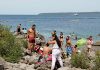
You can see the same pattern with our Fire and Emergency Services department. A large number of their calls to service are for people lost in the woods, people lost in the water, people who’ve fallen off cliffs or people who have built illegal bonfires.
Tourists.
If you squint a little harder, you can see the same pattern in our Roads budget, our garbage and landfill budgets, our OPP budget and so on.
Crowds of tourists add cost to almost every budget. Most owners of residential and farm properties resent paying those costs, resent paying higher taxes without a corresponding increase in the services they care about.
“Tourism should pay for tourism,” they tell our councillors.
So when the Government of Ontario put in place a mechanism for municipalities to charge a 4% tax on accommodations, a lot of municipalities — including ours — jumped all over it. In MNBP it has only applied to Short-Term Accommodations for the first couple of years — residential properties that take advantage of a loophole in the law to rent by the night instead of by the year.
But the revenues generated by the Municipal Accommodation Tax have been disappointing — nowhere near covering the out-of-pocket costs MNBP is facing.
Most destinations charge MAT on all overnight accommodations, not just STAs. After listening to voters during the election campaign, MNBP’s new Council set out to extend the MAT here.
They were going to implement it last summer, but delayed when they encountered heavy pushback from affected businesses. As Council considers implementing it for the summer of 2024, they are hearing from those businesses again.
Two delegations appeared at MNBP Council’s January 8 Meeting.
Griffin Salen, Past President of Tobermory Chamber of Commerce told council that the business community is not in favour of extending the MAT to commercial accommodators. The original rationale for the MAT was to level the playing field — remove some of the advantage that STAs gain by not paying commercial taxes or obeying commercial regulations.
He pointed out that levying a MAT on campgrounds would be particularly unfair, given that their main competition — national park campgrounds — would not have to charge the MAT.
Salen pointed out that Chamber members are already unhappy with paid parking, which charges their customers but has yet to produce any visible benefit. To get Chamber of Commerce members on board for the MAT extension, the community would need to see visible improvements — “You can’t just keep adding tax without adding improvements and we’re not seeing improvements.”
He also stressed that the business community needs a lot of lead time on any new charges. A few months are not enough.
The second delegation was Jeff Mielhausen (Bear Tracks), Wilf Laman (Lion’s Head Beach Motel) and Serge Marcella (Tamarac Island Inn). They also asked Council to vote down the MAT extension proposal.
They stressed that this is not the time to add a burden to MNBP’s hospitality sector. Many businesses are struggling, still recovering from the pandemic and faced with labour shortages, increased wage costs, increased insurance costs, increased propane costs and dwindling margins. They encouraged MNBP staff and council to stop thinking of tourism as a problem. Tourists aren’t the problem — lack of facilities is the problem. With many tourists coming back every year, motels and campgrounds are the solution, not the problem.
The problem, they said, is that Parks Canada is attracting an influx of daytrippers. It is unfair to go after a small segment of the industry — accommodators — to solve a problem they are not causing, while the national parks are making out like bandits and they’re exempt from MAT.
They pointed out that the extended MAT would apply year round. What tourism expenses does the MNBP have in the winter that entitle it to add a further burden to a struggling sector?
Council will have to find a way to steer the municipality through this. They’re the referee and it’s always hard to satisfy both teams.