



John Francis,
Bruce Peninsula Press
Wild Parsnip has been a problem in Northern Bruce Peninsula for at least 15 years. It can form a solid wall along roadsides. It can take over entire fields. It can also give you a very nasty sunburn.
Wild Parsnip sap contains furanocoumarins, chemicals which make human skin extremely sensitive to sunlight — exposed skin can get badly burned and blistered in a matter of minutes. (Treatment: cover the affected area to block further sunlight, then wash the furanocoumarins off with soap and warm water.)

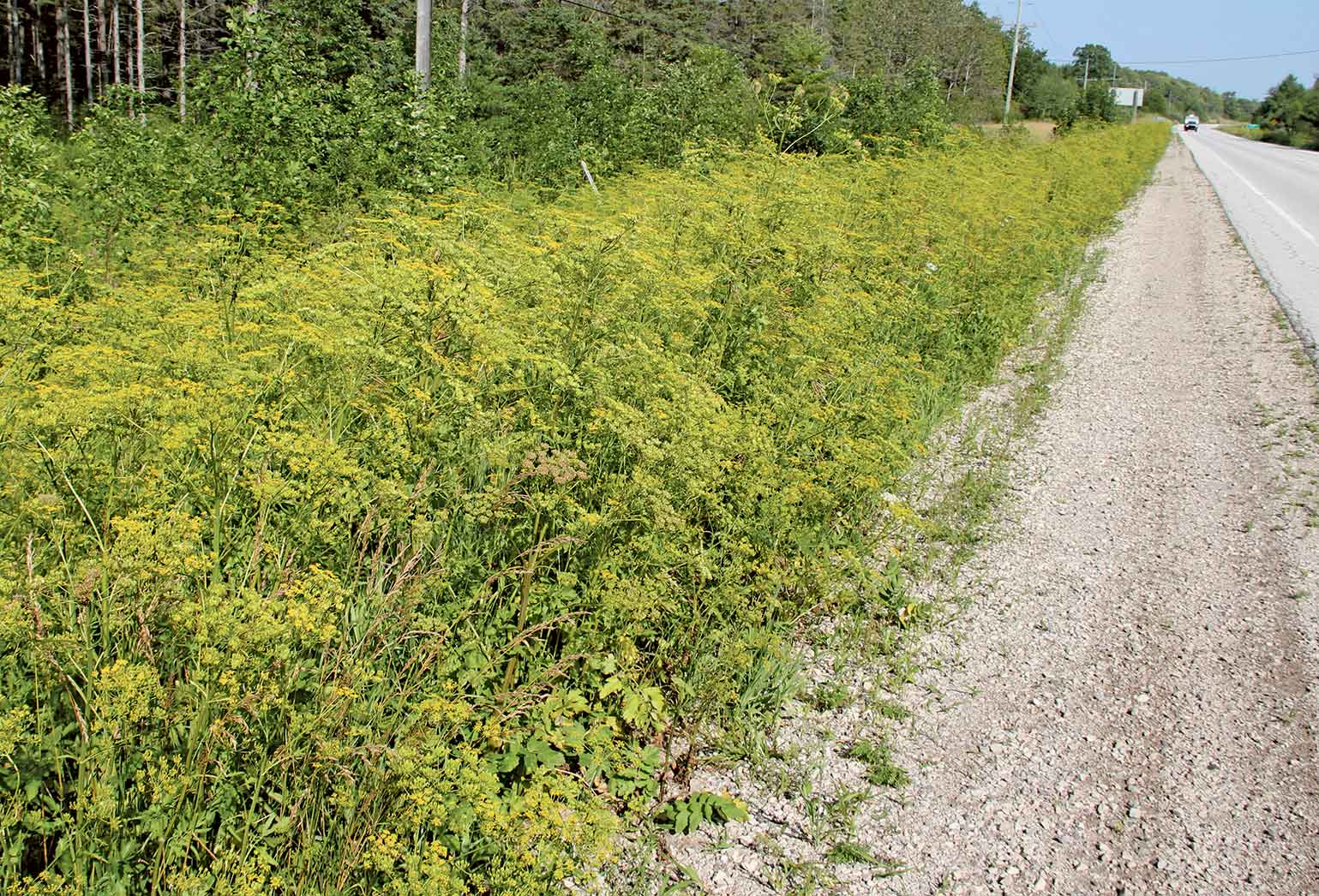
Once Wild Parsnip gets established in an area, getting rid of it is difficult. This drama has been playing out for many years on the Highway 6 roadside north of Lindsay Flats (see photos).
One story has it that ground zero for the infestation was the parking lot at Lindsay Tract Trails. All that would have been needed was for a car, truck, trailer or snowmobile to bring in a seed head from somewhere else, caught in a bumper or grill. Shake a couple of seeds loose from that seed head and the infestation is off and running!
Wild parsnip is particularly well suited for taking over roadsides. When the roadside weed-cutting tractor comes to visit in July, Wild Parsnip has already produced its first lot of seeds and it’s tall enough to be chopped off. The cutting blade then distributes the seeds over the next kilometre or so of roadside. Ever since that first patch was established, you could watch it spread in both directions from the Lindsay Tract Trails parking lot — northward on the east side, southward on the west side. It also spread onto some nearby municipal roadsides.
By 2022, Wild Parsnip formed a solid wall along the east side of Highway 6 for a kilometre or so. In recent years, a chemical spray campaign has somewhat reduced the infestation.
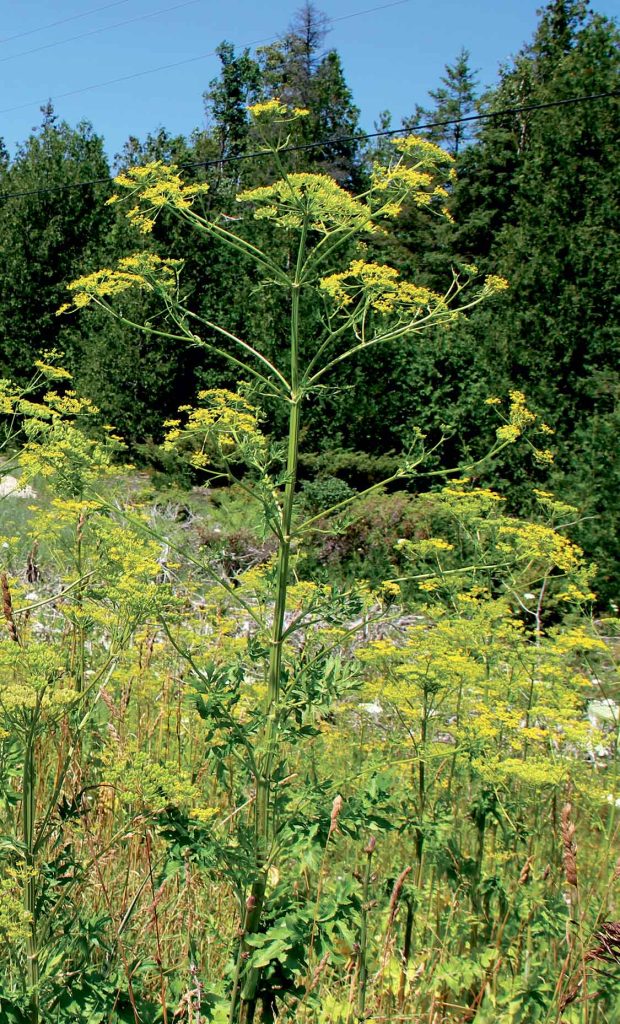
Wild Parsnip is a biennial plant, which means that it lives for two years. The first summer, it consists of a rosette of leaves, which store energy in the root (a parsnip). The second summer, the plant uses up all the energy stored in the root to put up a tall stem with multiple flowers. Individual plants can exceed five feet in height and can produce nearly a thousand seeds. Wild Parsnip seeds remain fertile for up to nine years and are able to germinate and thrive in relatively poor soils — roadsides, for example. This means that an outbreak will keep coming back, for up to nine years, even after you’ve killed all of this year’s plants.
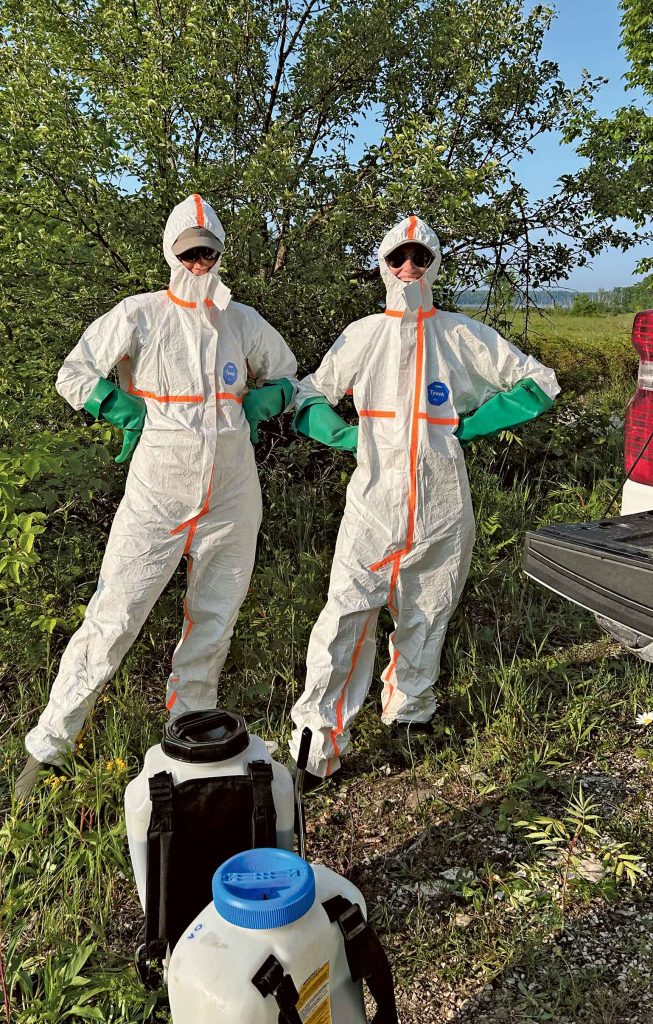
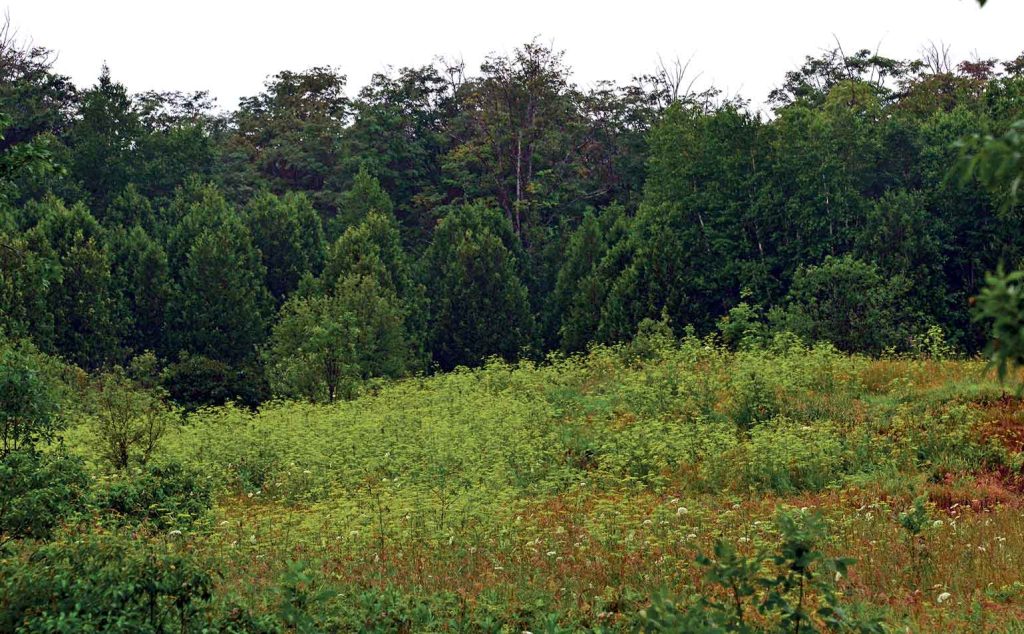
Bruce Peninsula National Park staff are monitoring 36 Wild Parsnip infestations in the park. The worst of these are in old field environments in the former ranch areas around Crane Lake. Park staff have been monitoring and fighting that infestation since about 2012. They have it under control, but have been unable to eliminate it.
Parks Canada uses a two-phase technique to control Wild Parsnip. They start with a chemical treatment in June to kill the young plants, then come back in July to cut off (then bag and destroy) the flower heads on any plants they missed in June.
But it’s impossible to get every flower and there will always be old seeds lying around. “It’s a long game we’re playing,” says Anna Fletcher, who is running the invasive species program for Bruce Peninsula National Park.
The moral of the story: don’t let it get established.