



By John Francis
Every year it gets a bit easier to be a hobby naturalist. It used to be that you had to look everything up in books — many of them daunting, such as Gleason & Cronquist’s 810-page Manual of Vascular Plants, which is entirely text, with no photos or drawings whatsoever.
A sample of text from that manual, excerpted from the key to the goldenrods (genus Solidago, 56 species):

“Infl various, from axillary to thyrsoid or paniculiform, but not corymbiform or subcapitate, except in some reduced arctic-alpine plants.”
You get the idea. It used to take hours to key out a single plant. And even then, all it gave you was a name. In Latin.
Now there’s an app for that.
There’s the Seek app from iNaturalist. You can use the camera on your phone to key out plants, but it also does mammals, frogs, butterflies, moths and more. It is occasionally wrong, but even then, it lets you know where to look in your flower/bird/butterfly/amphibian field guide. For each species, Seek will offer a link to other apps (frequently Wikipedia) offering more information.
For birds, there’s Merlin, a free app from the Cornell University School of Ornithology. Among other things, it will listen to birds singing and tell you what species they are. As with Seek, Merlin is occasionally wrong, but very helpful all the same.
Merlin and Seek are both free in the App Store/Google Play. I recommend both of them wholeheartedly.
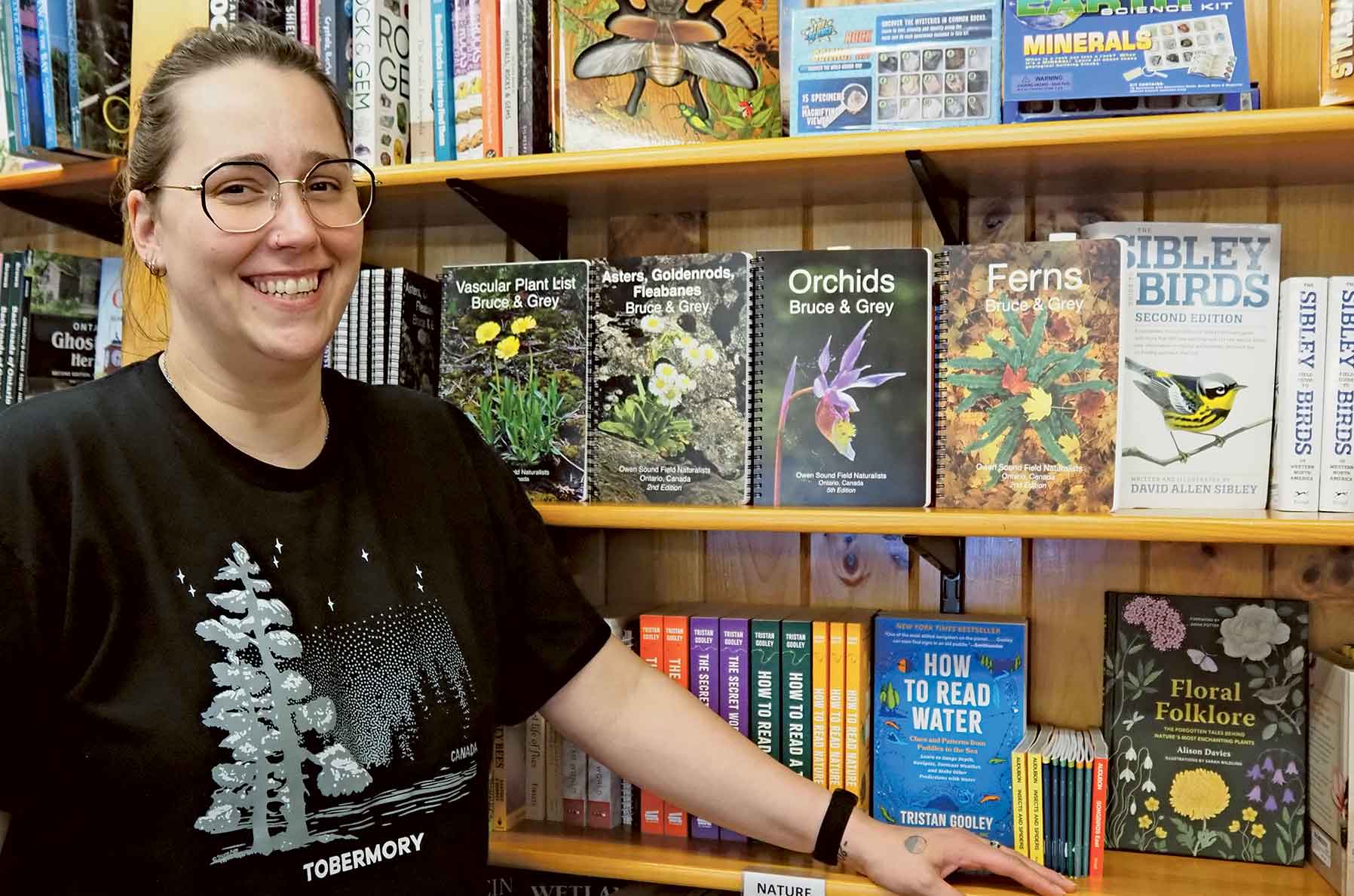
But the books have gotten a lot better, too. The Sibley Guide to Birds is a birder’s bible, with multiple drawings of each species, showing summer, winter and juvenile plumages, coupled with excellent range maps. It should live on everybody’s breakfast table.
For plants, the Owen Sound Field Naturalists have recently updated their guides to the three most interesting plant groups: Ferns, Orchids and Asters/Goldenrods/Fleabanes. These guides are nothing short of amazing, with superb Willie Waterton photos throughout.
For example: instead of Gleason & Cronquist’s text-only key to 56 species of North American goldenrods, OSFN’s guide offers four Willie Waterton pictures of each of the 18 species of goldenrod which occur in Grey-Bruce.
The OSFN guides make it fun to learn about orchids/ferns/goldenrods.
But that’s not all. Ontario Nature has a superb online guide (not an app) to the reptiles and amphibians of Ontario, including links to Toronto Zoo recordings of frog calls.
With the peninsula’s abundance of provincial parks and nature reserves, national parks, conservancy properties and other parklands, natural history is the perfect hobby. People drive for hours or days to come here. We wake up in the morning and we’re already here. We are so lucky.